

How to Follow Up After a Networking Event
Most networking value isn’t lost at the event. It’s lost in the days after, when a good conversation quietly fades because nobody turned it into anything.
You meet someone, the conversation goes well, and you mean to follow up. Then the moment passes, not from a lack of interest, but from a lack of a plan. “I’ll reach out sometime” isn’t a plan. It’s a hope, and hope rarely survives a full inbox.
Knowing how to follow up after a networking event is one of the simplest networking techniques to improve, but it’s also one of the easiest to neglect. Following up well isn’t complicated. It does, however, depend on timing. What works right after an event is different from what works two weeks later, and different again from what keeps a relationship alive six months down the road.
In the First 48 Hours: Make It Count While It’s Still Fresh
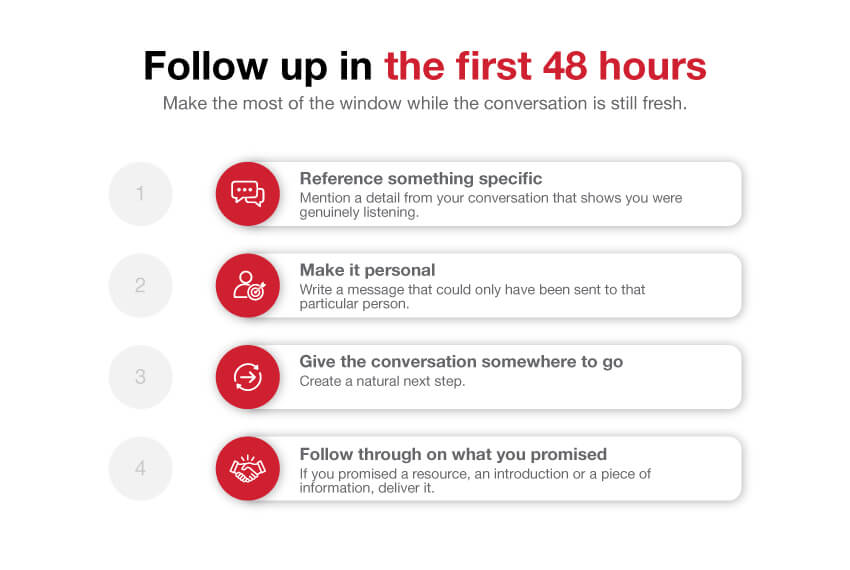
The conversation is sharpest in your memory during this window, and it’s likely still fresh in theirs. Following up within a day or two makes it much easier to reference specific details naturally.
Skip “great meeting you.” It’s polite, but it gives the other person very little to respond to. Instead, name the actual thing you talked about: the hiring challenge they mentioned, the industry shift you both noticed, or the introduction you offered to make.
It was great talking with you at the BNI meeting yesterday. I enjoyed our conversation about the challenges you’re seeing with hiring as your company grows. You mentioned you were looking for someone with experience in small-business HR, and I may know someone worth connecting you with. Happy to make an introduction if that would be helpful.
That message could only have been written to that person. That’s what makes it work, and it’s a useful test for almost any follow-up you send.
Notice that the message also gives the conversation somewhere to go. A useful follow-up creates a natural next step, whether that’s an introduction, a resource, another conversation, or simply a reason to respond.
If you promised something specific, such as a resource, an introduction, or a piece of information, this is also the window to deliver it. Following through quickly says more about your reliability than the message itself ever could.
See why 355K+ entrepreneurs choose BNI
Get InvitedIn the Following Weeks: Resist the Pitch
Once the initial follow-up is sent, the temptation shifts. A new connection can start to look like an opportunity, especially if there’s a real chance the person could become a client. That’s exactly when it’s worth slowing down, and exactly the kind of moment behind common networking mistakes that cost people referrals.
Moving from “It was nice meeting you” to “Here’s what my company offers” changes the relationship before it’s had a chance to become one. The person you met is being asked to become a prospect faster than the conversation earned.
The better move in these early weeks is to lead with usefulness instead of an ask, the same principle behind relationship marketing. Send the article you mentioned. Make the introduction you offered. Ask how the project they described is going. None of it needs to reference what you’re hoping to get out of the relationship.
This is the mindset BNI members are trained to lead with: look for ways to contribute to a relationship before asking what it can do for you. Not every person you meet will become a client. Some may become referral partners, collaborators, sources of expertise, or the person who introduces you to someone important much later. You can’t know where a professional relationship might lead after one conversation.
In the Months That Follow: Consistency Over Cleverness
This is the stretch where most follow-up quietly dies, not because the first message was bad, but because nothing happened after it.
There’s no single correct method for staying in touch. A handwritten note, a quick message, a phone call, or an occasional coffee can all work, but only if it’s something you’ll actually keep doing. The most polished method on paper is worthless if you abandon it after two tries. The method that works is the one that fits how you actually operate.
In practice, staying connected is often simple. Congratulate someone on professional news they shared. Send something relevant to a conversation you had months ago. Make an introduction when the right person comes to mind. If you said you’d reconnect in a few months, actually do it.
The goal isn’t constant contact. It’s enough meaningful contact for the relationship to keep developing.
This is part of why structured networking environments can make consistency easier to sustain. In a BNI Chapter meeting, Members see each other regularly, so repeated contact is already built into the experience. You still have to ask questions, follow through, learn about other people’s businesses, and get to know them. The structure simply creates consistent opportunities for those relationships to develop.
Over time, that repeated interaction can turn recognition into familiarity, and familiarity into trust.
Why Following Up Matters