

What Is Networking? A Clear Approach for Business Professionals

Networking is one of those words that means everything and nothing at the same time. Ask ten business professionals what it means and you’ll get ten different answers: attending events, building a social media following, collecting business cards, grabbing coffee with former colleagues. The word gets used so broadly that it’s easy to lose sight of what actually makes it work.
That gap between perception and reality is exactly why so many professionals put real time into networking and still see little to show for it. The activity looks right on the surface, but the approach underneath it is off. Networking isn’t about volume of contacts or frequency of events. It works when you treat it as a long-term relationship-building system rather than a one-time activity. Organizations like BNI were built around exactly this distinction, giving business professionals a structured, repeatable way to turn relationships into results.
Understanding what networking actually is, and what it isn’t, changes how you approach it entirely.
What is Networking?
At its core, networking is the process of building and maintaining mutually beneficial relationships. It’s the steady development of professional connections based on mutual value and respect.
Many professionals confuse networking with prospecting or direct sales. Prospecting is about finding a customer for today. Networking is about building relationships that create opportunities over time. When you build a strong professional network, you’re creating a reliable web of visibility, familiarity, and long-term connection.
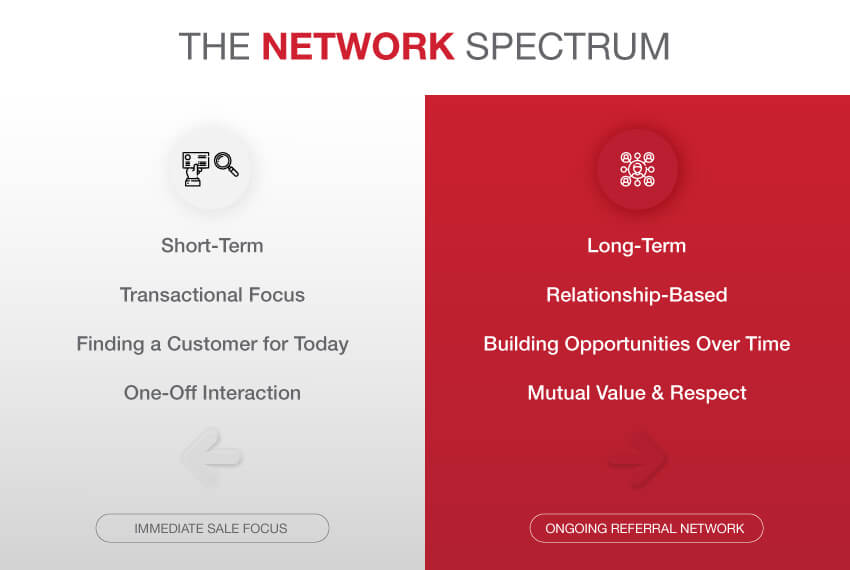
While personal networking often focuses on shared hobbies or social interests, professional networking centers on business growth, career development, and mutual support. However, both rely on the same underlying principle: people refer business to people they know, like, and understand. It’s not something that can be rushed with a polished elevator pitch or a stack of business cards.
Why Most Networking Doesn’t Work
If networking is so valuable, why do so many professionals struggle to see a return on their investment of time and energy? The answer usually comes down to consistency.
Many people treat networking as a single event. They attend a mixer, pass out their information, and check the activity off their to-do list. Without consistency, those introductions don’t develop into real familiarity. And without familiarity, there’s no foundation for meaningful business relationships to form.
When the approach is inconsistent, the results tend to be as well. You might occasionally stumble into a lucky connection, but you can’t build a predictable business strategy on chance. Sporadic effort leads to sporadic outcomes. BNI was designed specifically to solve this problem, replacing sporadic event attendance with a weekly, structured meeting of the same group of professionals.
See why 355K+ entrepreneurs choose BNI
Get InvitedWhat Makes Effective Networking
Successful networking requires a strategic approach built on repeated interactions. When you show up regularly in the same professional environment, you create consistency.
Consistency leads to familiarity. As people become more familiar with you, how you communicate, how you approach your work, and how you support others, they begin to develop confidence in your ability to deliver.
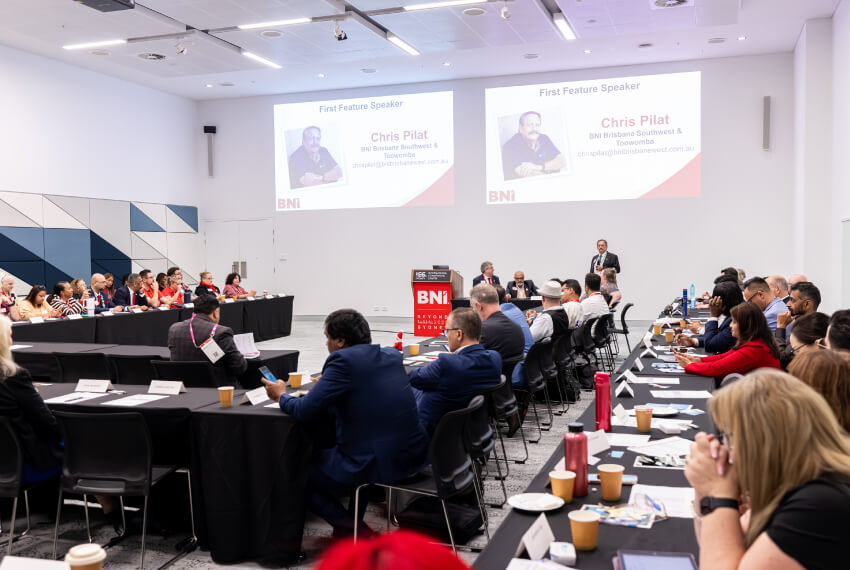
Confidence is what drives referrals and opportunities. A colleague will only recommend your services to someone in their network if they feel confident in the experience you’ll provide. Over time, networking stops feeling like a game of chance and becomes a more predictable system for business growth.
It’s why BNI members often describe their chapter as the most productive hour of their business week, the consistency is built in, so the relationship-building compounds over time.
From Activity to Relationship Building
To see measurable outcomes, you have to change how you measure success.
Most people measure networking by activity: how many people they meet, how many conversations they had, or how many cards they collected.
Effective networking shifts that measurement toward relationships. The focus moves from meeting as many people as possible to investing in fewer, more meaningful connections.
This shift in mindset is what turns scattered effort into tangible business results. When you stop looking for a quick transaction, you start listening more carefully. You look for ways to support others and understand their business challenges.
By focusing on how you can add value, you naturally become someone others think of when opportunities arise.
The Importance of Structured Networking
Building meaningful relationships takes time and maintaining them requires a reliable environment. This is where structured networking becomes especially valuable.
Structured environments create conditions where relationships can develop more quickly. When you meet with the same group of professionals on a regular schedule, you’re no longer starting from scratch each time.
That consistency allows people to better understand what you do, who you help, and how you work. Over time, that clarity makes it easier for others to recognize opportunities and connect you with the right people.
For BNI, the structure goes beyond just a meeting schedule. Members actively learn how to support one another, identify ideal referrals, and communicate the specific value they bring to the market. It provides a system designed to support relationship-based networking in a consistent and intentional way.
Networking Tips for Beginners
If you’re new to professional networking, or want to better your approach, the best thing to do is simplify your expectations.
You don’t need to walk into a room and meet everyone. Doing so often leads to surface-level conversations that are easily forgotten.
Instead, focus on building a few deeper relationships. Have more thoughtful conversations. Ask questions about how others work and what challenges they’re facing.
Expect the results to take time. You’re planting seeds, not harvesting on day one.
Showing up consistently and taking a genuine interest in others will naturally build familiarity, credibility, and recognition over time.
A Better Approach to Networking Starts Here