

Custom Preloader Icon

Applying Givers Gain in Business

Givers GainĀ® is not only a great way to get business; it’s an even better way to do business.  This is why BNI has made it our principle core value in our networking organization.

Giving has many cultural and legal differences around the world. In some cultures, giving is seen negatively, yet it is a positive force in society and that this can be applied in every business regardless of location or culture.

What is important in acts of giving is our motivation. Here is a list of motivations that fits with the philosophy of Givers Gain and helps us maintain mental clarity around our motivations when we give.

  1. We give because we understand that in a community, what we do, others will do, and we all benefit.
  2. We give because we know that in the same situation others would do the same for us.
  3. We give because we want to give back where we have profited before.
  4. We give because when we work together, we get bigger and better results than working on our own.
  5. We give because we enjoy it.

Having ethical motivation is key to giving. You can always give once and justify your motivation, but giving over and over again requires a motivation that is understood not only by you but also by the people you surround yourself with. Adopting one or more of the motivations above will help you stay grounded to your motivation.

Here are some examples of where giving in business changed lives.

Allen. is a commercial real estate agent in Orange County, California, USA.

Throughout 2009 and 2010, Allen had met with as many businesspeople as he possibly could, using his network to find these people and to book a meeting with them. They were not just from his local BNI group but were members throughout the county. The more people he met, the more he was able to become a super connector for the local business community. He was generating a ton of business for the local economy simply by making connections and giving the gift of a referral.

He even won awards for it and became the star of his group. He was recognized as having the most one-to-ones, and he also gave out the most referrals. Allen focused on building relationships and once he was convinced he had found a good business opportunity for both of his contacts he would often phone the contact on the spot and put them together, thus creating a powerful introduction much more likely to lead to business.

When asked how all of this activity had affected his business at a bad time for real estate, he said, ā€œI am completing the best year in my 26 years in the business. I have had a great, great year.ā€

Giving in business, as in life, works in many different ways. Here is another example.

David runs a fantastic print business. He offers a brilliant service, great value, and delivers when he says he will, if not before. If you ever try to pay him a compliment, he’ll offer a sheepish smile and an explanation that he was only ā€œdoing his job.ā€

Just up the road from where his business is based is the area’s largest independent hotel, which, of course, he is a trusted supplier for. After turning around an order on a particularly short deadline, the hotel manager, showing the gratitude effect, offered David a meal for two at the hotel’s restaurant as a way of saying thank you.

David thanked his client, graciously declined the offer, and instead asked for something else—for them to take the call of one of his other clients, a commercial designer and project manager named Suzanne. Suzanne had recently asked for help and David, being a supplier of hers, decided to use this opportunity to get her the introduction that her business needed.

The introduction was made, business was done, and both of David’s clients were happy.

In the true spirit of giving, the additional revenue has allowed Suzanne to take on larger development projects, which David now prints for. The local sub-contractors who are used on these projects have increased revenue and now come to David when they are in need of his products and, due to the quality of his work and products, they become ambassadors and referrers for his business.

David is selfless, humble, and a wonderful networker because he embraces the principles of Givers Gain. The cycle of giving continues to benefit him and those around him.

Acts of giving change lives. Acts of giving can be powerful in business regardless of the size.  We can give many things. Here is a list of the types of giving that make a real impact in a business community.

  1. Give a referral opportunity between two other businesses you know—maybe a supplier of yours and a client of yours.
  2. Give mentoring to a business that needs your expertise.
  3. Give your knowledge to local business groups.
  4. Give to local education and youth community groups.
  5. Give to the elders of the community.

All of this giving activity is part of an eco-system that will come back and benefit you and those you care about in a positive way. You choose how to practice Givers Gain that is right for your business. Once you make a commitment to using the power of Givers Gain to fuel your business, success will follow.

The more this happens then the more energy can be given to important global social concerns such as climate change and sustainability of our planet. Infinite giving allows us to focus on the bigger picture. The bigger picture is living in a world of plenty where resources are plentiful, and the struggle of life is not against each other. Rather, it is against suffering and scarcity.

Based on material from Infinite Giving, The Seven Laws of Givers Gain.

Called the ā€œfather of modern networkingā€ by CNN, Dr. Ivan Misner is a New York Times bestselling author.  He is also the Founder & Chief Visionary Officer of BNI (www.bni.com), the world’s largest business networking organization.Ā  His latest book, Infinite Giving, The 7 Principles of Givers GainĀ® is a book about building a life and business where you don’t have to choose between winning or helping others.Ā 

The Sponsoring Mindset

By Dawn Lyons, BNI Executive Director San Francisco Bay Area

The number one question we receive is ā€œhow do we grow our chapter?ā€ Well, the answer is simple, sponsor new members into the chapter. That’s it! That is the ONLY way to grow your chapter.  Your chapter WILL grow when your members sponsor more members into the chapter. See, there is a huge difference in inviting visitors and sponsoring new members and personally, I wish we would all focus even more on sponsoring!

Setting our intentions on sponsoring new members versus just inviting guests is key to attaining the proper sponsoring mindset. I could invite 100 guests and never sponsor a new member and therefore never grow the chapter. Sure, there are definite benefits to having 100 guests come through the chapter, no doubt on that at all. But then, we are all sitting around wondering why the chapter hasn’t grown in size! It becomes a vicious cycle.  What if the focus was on the final outcome of sponsoring a new member? What if… we all Sponsored 1 in 2021?

Our brains are pretty amazing and if we set the intention of ā€œSponsoring 1 in 2021ā€ the brain will find solutions to do that. Our actions will happen naturally because the brain is seeking to complete the intention of ā€œSponsoring 1 in 2021ā€! We will invite people and maybe we invite more appropriate people by inviting viable candidates that CAN apply for membership – not just inviting a member from another chapter to be our visitor so we get credit.

So, how do you get a ā€œSponsoring Mindset?ā€ You simply decide that you want to. Decide to ā€œSponsor 1 in 2021ā€ and keep that mantra going until you do. I promise your actions will be heightened, your determination will be stronger, and you will grow your chapter! You probably have a couple of members who already have a sponsoring mindset, they may sponsor 2-4 people a year or more. What if more members had this mindset? My husband, Mike Macedonio, interviewed our top 1% of members in sponsoring to understand their mindset and why they are all so good at it! Feel free to go to www.bni-educationalvideos.com and watch several of the videos to see the different strategies used by our top 1% in sponsoring. Sponsoring is a mindset. Set your intention to just ā€œSponsor 1 in 2021ā€! Utilize this logo to keep it top of mind, even consider putting it in your slide deck for recognition! Place a red star next to the logo as your members ā€œSponsor 1 in 2021ā€ and see who can get the most stars, run a sponsoring contest, pull your chapter lifetime sponsor report and give recognition – there is so much that can be done to begin to focus on sponsoring! Will you decide to ā€œSponsor 1 in 2021ā€ for the health and the wealth of your chapter? I hope so, and an early congratulations for those of you who ā€œSponsor 1 in 2021!ā€

Misner’s Corollary to Murphy’s Law

I learned about ā€œMurphy’s Lawā€ in graduate school.   It basically says that ā€œwhat can go wrong, will go wrong.ā€  Although this law feels very pessimistic, there is value to it.  It gives a framework for people to look for the flaws in their thinking.  When one does that effectively, it’s easier to address potential issues before they arise. 

This leads me to ā€œMisner’s Corollary: Sometimes, what can’t go wrong, will go wrong!ā€    Here’s what I mean by that.  When I have introduced something new into my business, I have often thought about what could go wrong with this new approach or idea.  If you do that in advance, you truly help to head off challenges.  However, what I’ve learned over the years is that you also need to think of what ā€œcan’t go wrong.ā€  I know this sounds crazy and even more pessimistic however, if you go about this in a thought-provoking manner – you can truly think through potential challenges before you proceed.  In particular, you want to consider, what I call, the ā€œunintended consequences of a seemingly good idea.ā€  This tends to happen when you have a solution to a problem and almost everyone agrees that the solution will definitely help with the problem.  You think about how you will roll it out and avoid those things that could go wrong with that roll out and its implementation.  You then roll out the idea and all goes well.   What we tend to forget however, is the unintended consequences of that new idea.  In other words, the roll-out goes great but then you create a whole new set of problems that never existed and were never considered when dealing with the original problem.

This has happened several times in my career.  An example of this is the implementation of a ā€œsubstitute programā€ relating to attendance in BNI.  It took many months to figure out a program where BNI members can send a substitute in their place to the weekly chapter meeting.  The idea was that the substitute would represent the member (employees and customers were the prime substitute candidates) and then the member would be well represented and wouldn’t have an absence.  Sounds good and looked good on paper however, there was a long-term unintended consequence – some members would look for virtually anyone to be a sub.  This created a less than satisfactory situation for the group.  Especially when that sub basically just pitched their own business instead of representing the person they were supposed to be there for.  This was the unintended consequence of a seemingly good idea.  It has taken years to address this issue and it is still not perfected.

Another example of the impact of unintended consequences was my company’s transition from paper copies of referral slips (the small paper slips that included the name and contact information of a referral) over to digital online referrals.  Despite the massively improved process of passing and tabulating the information, there was a sense of loss by many members in the ā€œphysical passing of a referralā€ to another member.  Luckily, this lingering feeling was quickly erased with the outbreak of the Covid Pandemic and the transition of all our groups to meeting online.  This meant that physical referral slips were no longer even relevant. 

One of the problems with Murphy’s Law and Misner’s Corollary is that you never know for sure if it would have been an issue because the problem never surfaced (which is probably a good thing).

There have been some occasions where employing these strategies do have clear cut results that can be identified.  One such occasion was in January, 2020 when BNI’s CEO, Graham Weihmiller, began to transition 10,000 weekly, in-person networking meetings to online networking meetings.  He expected the pushback early on and he therefore started the transition where it was first necessary (Asia), and experimented in areas where it was not necessary yet (North America).  By moving forward and experimenting with the program, the organization was able to prepare for much of the pushback.  The result was an incredible pivot of 10,000 groups to online in a matter of weeks as it was rolled out country by country across the globe.

The lesson I learned here – is that when you have a good idea, think about what can go wrong with that idea.  Then, spend time thinking about what ā€œcan’t go wrong.ā€  This means you need to really think outside the box to consider the potential unintended consequences.  Most importantly – test the idea in some limited way to identify the things you thought couldn’t go wrong.  Believe me when I say, you still might discover unintended consequences.  The experimental testing phase is critical to avoid Misner’s Corollary.

Called the ā€œfather of modern networkingā€ by CNN, Dr. Ivan Misner is a New York Times bestselling author.  He is also the Founder & Chief Visionary Officer of BNI (www.bni.com), the world’s largest business networking organization.Ā  His latest book, Infinite Giving, The 7 Principles of Givers GainĀ® is a book about building a life and business where you don’t have to choose between winning or helping others.Ā 

2020 – Finding the Good in Bad Times

I ended the year with a humorous graphic on my social media that said:

Dear 2021: I don’t want any trouble from you.  Just come in, sit in the corner, don’t touch anything, and keep your mouth shut.

Although it was pithy and pretty funny, there is an important flip side to this sentiment.  That flip side begs the question; ā€œwhat did we personally learn from 2020?ā€  I think that question is important to consider.  Complaining about things that go horribly wrong is easy – finding the positive in difficult situations is not.  I believe that finding the gems in life is the best way to move forward successfully.

I learned a great deal from 2020 that has become valuable takeaways for me.  Here are seven takeaways that I got from 2020:

1. Micro dose the news!  I learned to get what I need to know from News Apps and to not obsess about problems by watching the news hour after hour.  Negative news sells and the media has become a master of sharing negative news (technically, it’s now opinions as much, or more, than actual news).

2. One valuable lesson I observed involved a man that told me that he was able to keep his job but that he had to work from home and he also needed to care for his children and keep them doing their schoolwork.  He told me he was stressed out about that double duty. During our conversation, he came to the realization that this was actually an opportunity to spend much more quality time with his young children.  And although this was challenging, it might be a time period where they look back with fondness because of the experiences they had together.  When he embraced this idea, his vision of the situation completely changed.  That was a lesson I hope many others with children experienced.

3. I witnessed ā€œfocusā€ beating out ā€œfearā€ during 2020 for many entrepreneurs.  When people were frozen by fear, they had no hope.  But when that fear focused them, they had hope and they were much more likely to weather the storm.  Hope is more powerful than fear.  Hope is that little voice inside you whispering to you about what ā€œcan beā€ when everyone around you is screaming about ā€œwhat can’t be.ā€ Hope plus a plan, plus action, will lead you successfully through challenges.

4. I learned that during difficult times your network will be there for you. I saw people support each other emotionally and professionally.  I witnessed people give one another ideas that kept their business alive and thriving.  Two of the best examples included the furniture re-upholstery shop that became a Covid mask manufacturing company and a brewery that became a Covid hand sanitizer company.

5. I learned that if you wait until tough times are over, your business will be over.  During difficult times you need your network more than ever.  Social distancing is the wrong attitude – physical distancing is what was critical.  We needed to be more social than ever!  I saw successful businesses activate their network and not abandon it.

6. I learned that I could travel the world without getting on a plane.  I have 2.3 million miles on one airline alone!  It was a gift to be able to spend months with my wife at home.  It was the longest period of time we had together in our 31 years of marriage.  I will forever be thankful for that.

7. Lastly, I learned that friends are more important than ever.  The quality of the people in your life (or in your room as I call it in one of my books), will determine the quality of your life.  The quality of the people determine the quality of your life. 

For me, that last lesson was profound.  It was a tough year for me as it was for many people.  But I came out of 2020 with a clearer vision of who my friends are and who truly cares about me as a person.

I will forever be grateful for that.  So, I suggest that you not completely write off 2020 and erase the year from your memory banks.  Instead, consider what you learned from last year and what your positive takeaways are from that experience.  You will be a better person for it.

What are your takeaways from 2020?  What was something positive that you learned or took away from the most challenging year in recent history?  Give some thought to this question and write down your observations.  I believe that kind of reflection will help you recognize the good that took place during a tough year.

Called the ā€œfather of modern networkingā€ by CNN, Dr. Ivan Misner is a New York Times bestselling author.  He is also the Founder & Chief Visionary Officer of BNI (www.bni.com), the world’s largest business networking organization.Ā  His latest book, Infinite Giving, The 7 Principles of Givers GainĀ® is a book about building a life and business where you don’t have to choose between winning or helping others.Ā 

Passion, People, Process

After four decades in the business world, I have found that these three concepts truly summarize an entrepreneur’s recipe for success.

First, you must be passionate about what you deliver to your customers and clients.  Nothing great in life has ever been accomplished without passion.  This starts by making sure you (and your team) are working in your flame and not in your wax.   When people are working in their flame, they are on fire.  It shows in the way they act, and it shows in the way they speak about what they do.  When people are working in their wax, it takes all their energy away.  That shows up in the way they act and the way they speak as well. 

Not long ago, I had someone say to me that they were training people in their company on how to do something very important and after they did the training about ten times, they were getting bored.  That worried me at first because it sounded like ā€œtrainingā€ was this person’s wax and I asked him about that.  He said that he really enjoyed training and he wanted to get past this sense of boredom when doing the same material over and over.

I told him two things: 

1. The next time he does the training, recognize that this might be the 11th time he does the presentation, but it is the first time his audience will ever hear it.  Think about how excited he was when he was the one learning this content for the first time.  Embrace that feeling and make sure the team feels the excitement of learning this content for the first time as well.

2. Story telling is an important part of teaching your team new ideas.  Make sure to ā€œre-liveā€ the story – don’t just ā€œre-tellā€ the story.  Re-living the story gives you that same excitement as when you first experienced it or heard it.  It is that kind of passion that you need to apply to your business.

I saw him about a year later.  He had now done the training dozens and dozens of times.  He told me that my advice completely changed his approach and the people in his company who went to his training came out supercharged about the organization.  It gave him great joy to see the ā€œlights turn onā€ when he trained employees of the company.

This is what happens when you are passionate about the service you have to offer.

People are the next piece of the formula.  They are the most valuable asset for virtually every company in the world.  People drive the engine of a business.  To me, this means at least two things:

1. Constantly be pouring into your team.  Help them improve their performance by supporting them through training and through mentoring.  Entrepreneurs who make sure their people receive proper mentoring are going to be more successful.  We all have people in our lives that are ā€œin our story.ā€  These are people who have given us little nuggets of help or major support in some way.  These are people who helped us be a better version of ourselves and who are in our story.  A great entrepreneur, however, recognizes that the true measure of mentorship is not ā€œwho is in our story,ā€ but rather, it is ā€œwhose story are we in?ā€  Whose life have we changed in some way to help them be a better version of themselves?

2. Be a culture champion.  An organization’s culture is the secret sauce to great companies.  It is the DNA of an organization.  Make sure that the core values of the business are infused into the hearts and minds of the people throughout your organization.  If you have healthy organizational core values and you strive hard to share them and live them, you help to form a team of people who will be loyal to the organization’s values as well.  When this happens, make sure to treat that loyalty (to the core values), like royalty in the organization.

Lastly, it is about process. Having good systems in place allows people to engage in their passion to deliver quality performance.  Process is important.  Systems are important.  Here are two thoughts about process:

1. While process and systems are important, it is also important to understand that you must apply the processes more like Mandela than Attila.   In other words, don’t be a tyrant in the application of your systems.  When I was 13 years old, my mother gave me a paperweight which is still sitting on my desk to this day.  It says, ā€œDiplomacy is the art of letting someone else have your way.ā€  She told me that this was about collaboration not manipulation.  It was about working with people to help achieve success for everyone.

2. Check your processes regularly.  Don’t be enslaved to old practices.  Many times, I’ve seen companies create incredibly cumbersome processes which are demoralizing to people in the organization.  Here, it is important that the entrepreneur listen to their team when they say that a process is complicated.  Have mechanisms in place to ensure communication.  I have found that having advisory bodies in place representing the people who perform the work, as well as those who receive the service truly helps to deliver a better product.  I also recommend that you go in and actually perform the process yourself to see what they see.  That can truly be an enlightening experience.  

Passion, people, process. If you create an organization that executes well in these three areas, you will be a force to reckon with.  You will become a leader in your industry, and you will create an amazing enterprise.

Called the ā€œfather of modern networkingā€ by CNN, Dr. Ivan Misner is a New York Times bestselling author.  He is also the Founder & Chief Visionary Officer of BNI (www.bni.com), the world’s largest business networking organization.Ā  His latest book, Infinite Giving, The 7 Principles of Givers GainĀ® is a book about building a life and business where you don’t have to choose between winning or helping others.Ā 

We Don’t Pay You To Think!

Recently, my assistant, Dana made a couple suggestions to me.  Afterwards, she asked if I minded her giving these suggestions. I immediately said that not only did I ā€œnotā€ mind her ideas, I actually wanted her to share them with me.  I then told her the following story about an experience I had many years ago.

When I was 21 years old, I was finishing up my bachelor’s degree in California.  I had scholarships to help but I still needed to work a job to pay for my living expenses.  I found a good paying position working for a large chain grocery store stocking shelves from midnight until 7am four days a week.  Ugh.  That was brutal.  On some days, I would work all night, go home to get a shower, and then go straight to classes at 9am. 

Even then, I believed that sometimes You gotta do what you gotta do to get to do what you want to do.  Early on, I knew one thing for certain and that was that I did not want to work at a grocery store stocking shelves (at any hour of the day) for a career.  I came to that realization because of one conversation that I had with the ā€œEarly Shift Assistant Managerā€ of the store soon after I started my employment there. 

The night crew had some serious quotas for boxes that had to go up on the shelves each and every night.  While it might not sound very hard, the truth is that it was back breaking work and one of the most physical jobs I ever had. One morning as I was coming off a break, I had a conversation with the Assistant Manager. I made a suggestion to him that I thought would help in moving the many pallets of boxes that had to be taken by dolly to every aisle in the store.  It was a small suggestion but I thought it might help.  That’s when the Assistant Manager gave me a ā€œlife lessonā€ that I would take with me for the rest of my career. He said, ā€œIvan, we don’t pay you to think!  We pay you to get lots of boxes on lots of shelves every single night.  Now get back to work.ā€ 

I remember so vividly standing there and thinking – ā€œSomeday, I’m going to own my own business, and I promise that I will never, ever, say that to anyone who ever works for me.  Ever!ā€  In fact, I will tell them the opposite: ā€œI pay you to think!ā€  I want ideas.  I want input.  I want engagement.

I have no idea where this manager is today but if I ever meet him again, I would tell him that I appreciate that comment because it cemented my belief that managers and entrepreneurs need to do the opposite of what he said to me.  They need to listen to the ideas that employees have.  They may not all be gems but listening shows you care about them and their ideas.  It also gets engagement and possibly even a certain amount of loyalty because the employee feels that their input matters. I may not have applied this perfectly over the years but it is something that I have truly strived to always do with the people who worked for me.

I kept track of him for about ten years after I left the company.  At that point, he had been promoted to the ā€œMain Shift Assistant Managerā€ and I was well on my way to building a global enterprise that now has operations in more than seventy countries. 

I believe that ā€œpaying people to think,ā€ is exactly what entrepreneurs and managers should always be willing to do.  Sometimes we get our life lessons from people who give us great advice and sometimes we get our life lessons from people who give us horrible advice.  By applying a little discernment, they can both be a gift.  His, was certainly a gift for me.  I did my best to never, ever, follow it.

Called the ā€œfather of modern networkingā€ by CNN, Dr. Ivan Misner is a New York Times bestselling author.  He is also the Founder & Chief Visionary Officer of BNI (www.bni.com), the world’s largest business networking organization.Ā  His latest book,Ā Who’s in Your Room, The Secret to Creating Your Best Life,Ā  is available at bookstores and at Amazon.com.Ā 

Givers GainĀ® is Transformational

The world can be a dark and contentious place. Illness, famine, poverty, hostility, and desperation are all around us. But it doesn’t have to be that way. The world can be a better place. We can make a choice — a choice to be a voice of change, a change that can transform the world we live in. Entrepreneurs are well-positioned to help make that change.

Years ago, I implemented a phrase into the fabric of the core values of my company. That simple, two-word phrase ā€” Givers GainĀ® ā€” was a game-changer in giving people a different framework relating to the way they network with others.

Giving is an idea that proclaims we can be something bigger than ourselves. It’s a reaffirmation that our lives have significant meaning and that, through the community, we can be our best selves.

Related: Giving More Increases Your Happiness

For people who get it, this philosophy unlocks a whole new world of meaning and opportunity. So, our jobis to help people ā€œget it.ā€ More importantly, we can be intentional about helping people reach that place.

In 2010, Greater Good Magazine wrote that the National Institutes of Health found that when people give to others, ā€œit activates regions of the brain associated with pleasure, social connection, and trust, creating a ā€˜warm glow’ effect. Scientists also believe that altruistic behavior releases endorphins in the brain, producing a positive feeling known as the helper’s high.ā€

Researchers at the University of California – Berkley found that people who volunteered to multiple organizations were ā€œ44 percent less likely to die over a five-year period than were non-volunteers,ā€and John Cacioppo, author of Loneliness: Human Nature and the Need for Social Connection, says, ā€œthe more extensive the reciprocal altruism born of social connection …the greater the advance toward health, wealth, and happiness.ā€

There is a profound ripple effect that takes place through the act of consciously practicing a giving philosophy. I have seen the dramatic impact one person can have on another. I’ve observed the surging ripple that takes place as an act impacts one person and the next person and the next person, and so on. Within a community or a network, the ripple effect that takes place from this philosophy can influence hundreds or thousands of people. In fact, I believe it can influence the world. Giving is contagious. Conscious giving can be infinite.

Related: 4 Ways Companies Foster a Culture of Giving Back

There is a Chinese saying: ā€œIf you want happiness for an hour, take a nap. If you want happiness for a day, go fishing. If you want happiness for a year, inherit a fortune. If you want happiness for a lifetime, help somebody.ā€ For centuries, the greatest thinkers have suggested the same thing: Happiness is found in giving.

The results of this philosophy cannot be observed as a straight line in life. It is a complex zigzag of interconnected relationships that lead to a place of contentment and fulfillment, and it begins with the right mindset. It’s about taking off your bib and putting on an apron. It’s not about what’s in it for you, or how much can you get — it’s about serving and helping others in a very conscious way. Not doing so in a way that ignores the fact that there are takers in the world, but in a way that consciously chooses to find your fellow givers in the world. It’s easy to be cynical and think that the help you can offer is negligible, but it only takes a small gesture to change someone’s life.

We’ve all had people who are in “our story.” They are the people we talk about who have changed our lives in some way. However, there is something even more important: The real question is not who’s in our story but whose story are we in? Whose life have we made a difference in? This is what creates a meaningful life. It’s about being a role model for the people around you.

We often look at the world and hope that someday things will be different. But as my friend and author Sam Horn says, ā€œsomeday is not a day of the week.ā€ If we wait for someday, we are waiting for others to make the first move.

ā€œSomedayā€ can be today and it can start with us. Today is as good a day as any to be our ā€œsomeday.ā€ We can all make a difference starting today. And that difference starts with a transformational change within us in how we deal with the people around us and the world beyond them. We would be giving without a transactional expectation and giving to people in all parts of our life appropriately. We would understand that we give what we can afford and that it’s OK to gain in such a society — a humble society where saying thank you is the norm.

Related: These Inspiring Startups Make Giving a Core Part of Their Mission

Start small but start today. Begin local but think global. Influence one life, and you begin to influence the world. Just start with the person next to you and know that: ā€œYou may not make a world of difference, but you can make a difference in the world.ā€

Based on material from Infinite Giving, The 7 Principles of Givers Gain by Dr. Ivan Misner, Greg Davies, and Julian Lewis.

Pure Joy in One-to-Ones

By: John Jacob – Member of Business Wealth Builders City BNI, South Burlington, Vermont

Article originally featured in the September 2020 Givers GainĀ® Monthly, a BNI Vermont e-Newsletter

I recently celebrated my three-year anniversary with BNI and I can say that I am most passionate about the one-to-one process! Not only is it the most important tool in expanding our businesses, but it helps us grow both personally and professionally. After 36 years in the corporate world with GE and IBM, diving into a second career in small business was exciting and challenging, but wow! I had a lot to learn! I could have retired but given the longevity in my family (seven relatives made it between 95 and 105), I figured I could work another 20 years and still enjoy a 20-year retirement.


I knew that during this new phase of my life, I wanted to work with small businesses. Small business is the engine that fuels the economy. When you work in a corporation, there are a lot of talented people who do their job well for the good of the company. Many enjoy their jobs, but that’s what it becomes – a job. What I find fascinating during the one-to-one meetings is the passion displayed by our local business owners and entrepreneurs. Many have turned their hobby or passion into a successful business and continue to love waking up and ‘going to work’. As a new entrepreneur myself, I enjoy watching the excitement of hearing how they started their business and the challenges they overcame. In a corporation you rarely get to see the connectivity of the dozens of businesses required to bring a product or process to market. Corporations have dedicated sales teams selling to big contracts and are supported by dozens of specialized teams. Except for a customer service team, few individuals in a company have contact with customers. I am fascinated by the interlocking relationships of many businesses.


Finding and keeping customers is tough and there are no better teachers than our peer members. I’ve lost track of the number of solutions to problems I’ve found during my 150+ one-to-ones. I’m not just referring to finding a printer or chiropractor, but day-to-day issues that arise. There’s not much that hasn’t already been experienced by someone. The more one-to-ones, the more possible solutions you will find.


One-to-ones are the best way to spawn referrals. It’s a rare one-to-one that doesn’t lead to a referral — either for the member I’m speaking with or to someone that member can use. If you see someone drinking coffee, you can mention, “Hey, have you tried SawDog or Brave?”. Or if they are looking for a gift for an anniversary, you can mention, “Checkout Lavender Lady”. There are so many examples.


But my favorite part of the one-to-one process is the GAINs sheet where personal information provided leads to fun discoveries of shared interests which leads to deeper personal relationships. On my GAINs sheet I have mentioned places I’ve visited, my bucket list item of visiting the Grand Slam of tennis, my Civil War book collection and (for those over 50) my vinyl collection. All of which have led to friendships and additions to my bookshelf and record library!


So schedule your one-to-ones! You’ll discover something new about yourself, build meaningful relationships and better develop your business.

Is There Room for Intuition in Business?

Is there room for intuition in business?  Yes, most definitely.  Decades ago, I may not have thought that, but over the years I have changed my opinion and believe that intuition can be another tool in the business toolbelt. 

The definition of intuition is the ā€œdirect perception of truth or facts, independent of any reasoning process; it is an immediate apprehension; or a keen and quick insight into something.ā€

Years ago, I read a science fiction book that talked about ā€œintuits;ā€ people in their society who seemed to understand things instinctually.  Intuits were thought to have this incredible ability to have immediate cognition of a situation.  But the truth was that the intuits developed the skill to quickly assemble the facts, analyze the data, and predict probabilities based on their field of expertise. 

Yes, the book was science fiction, but it made a statement that really resonated with me.  It said something that totally flies in the face of the definition above.  It said that intuits trained for many years in very specific fields and that it wasn’t an instinctual understanding of an issue but in fact it was about quickly using reasoning given their amassed understanding of particular issues.  In the real world, that’s basically what predictive analytics do using computers today.

Having reconsidered my opinion on instincts, I noticed that as I acquired more experience in my field, I found myself better at assessing issues quickly and having a ā€œgut feelingā€ about the direction I should go.  What I had presumed was instinct, was – at least in part, quickly assessing the situation given my amassed knowledge of a particular subject. 

What some people think of as ā€œinstinctā€ might in fact be this amassed knowledge applied rapidly.  In fact, I recently had someone drop me a note about a particular challenge he was having.  I gave him some advice and in an email response discussing the resolution of the issue, he said I had assessed a particular problem accurately and concluded by saying, ā€œyour gut instinct is amazing!ā€  Truth be told, it was partly intuition but substantially my years and years of seeing situations like this and quickly assessing the problem and offering a solution.   In my very own narrow field – I looked like an intuit. 

As I acquired more experience, I learned to follow my intuition or ā€œgutā€ more and more.  Trust me when I say it is not infallible, but I no longer take it for granted.  I listen to the gut feeling far more today than I did when I was in my 20’s or 30’s.   

Haven’t we all been in situations where we had a feeling, we should do something but we didn’t.  When that creates a problem, we look back on it and we clearly see why we should have followed our intuition.

Our intuition, at least in part, is probably related to the experiences we’ve had and what we are doing is quickly processing an interpretation to a situation based on those experiences.  On the other hand, I suppose it could be a heightened sense of ESP but I’m thinking it’s the former.

Called the ā€œfather of modern networkingā€ by CNN, Dr. Ivan Misner is a New York Times bestselling author.  He is also the Founder & Chief Visionary Officer of BNI (www.bni.com), the world’s largest business networking organization.Ā  His latest book,Ā Who’s in Your Room, The Secret to Creating Your Best Life,Ā  is available at bookstores and at Amazon.com.Ā 

Obligation vs. Opportunity – A New Mindset

by: Erin Perrin, Mortgage Expert with Academy Mortgage
Queen City BNI, Burlington, Vermont

We’ve all heard the saying ā€œglass half empty or glass half full.ā€ These are interesting times we’re living in, and sometimes I find it’s hard to be that glass-half-full kind of person. Mind you, every day I am still telling my boys ā€œthe choice is yours – it can be a good day or a bad day – it’s in your power.ā€ But what happened to my power?
Then some interesting things happened. First, I heard a member of my BNI chapter talk about affirmations. She spoke about the power we all have to change the reality of our lives; to pivot, change direction, focus our energy in a way that helps us grow. She shared that our energy leads us, we can change that energy, and we can realize that our lives are a series of choices. Second, I heard the BNI Power of One Podcast 20 about obligation vs. opportunity. In this podcast, they detailed things that hit home for me about how I can choose each time to evaluate how I look at things.


These two seemingly unrelated incidences were the motivation I needed and everything clicked. The day-to-day challenges, big or small, could be my opportunities, not my obligations! It wasn’t just about my work, or the kids, or BNI, or continuous change. I just needed to change my mindset!


Mark Sanborn wrote a great book entitled ā€œYou Don’t Need a Title to be a Leader.” In it, he shares that while building his business he became so overwhelmed with answering the phone that he stopped wanting to answer the phone. He knew he needed to make a change. He goes on to say ā€œI began to see what happened to me as an opportunity rather than an obligation. And it made all the difference. Now when the phone rings, I respond to each call as an opportunity to serve, earn, learn, influence, network, encourage, or teach. The difference isn’t in the caller or the purpose for the call; the difference is in my response. …Genuine, authentic leadership infuses meaning into your life, because you know that your efforts count and that you are serving the needs of others as well as your own.ā€


So, how do you view your BNI Membership?

Consider the weekly meetings: Are they an obligation, something you have to do, something you have to attend? Are they an opportunity, a chance to get in front of your Team, to further build relationships, and teach your Team how to find you referrals?


What about BNI Trainings? Do you view them with heavy obligation, or as an opportunity to take advantage of learning new skill sets to take your Chapter and your businesses to the next level?


You choose how you perceive BNI, your work, and your life. Everything can be either an obligation or an opportunity, and that choice will influence the results you get. I challenge you to look at the changes you’re facing in your business, in how you teach and play, and yes, even your BNI experiences. Remind yourself it’s your choice…and choose wisely!

Being Intentional About Diversity

With everything going on in the world today, we thought it would be a good time to take a step back and talk about diversity, and more specifically, about diversifying your business network.  Developing a truly diverse network is not only the right thing to do, it is also the smart thing to do.  Because let’s be honest, different people bring different things to the table in terms of who they know and how they might be able to refer or otherwise assist your business.

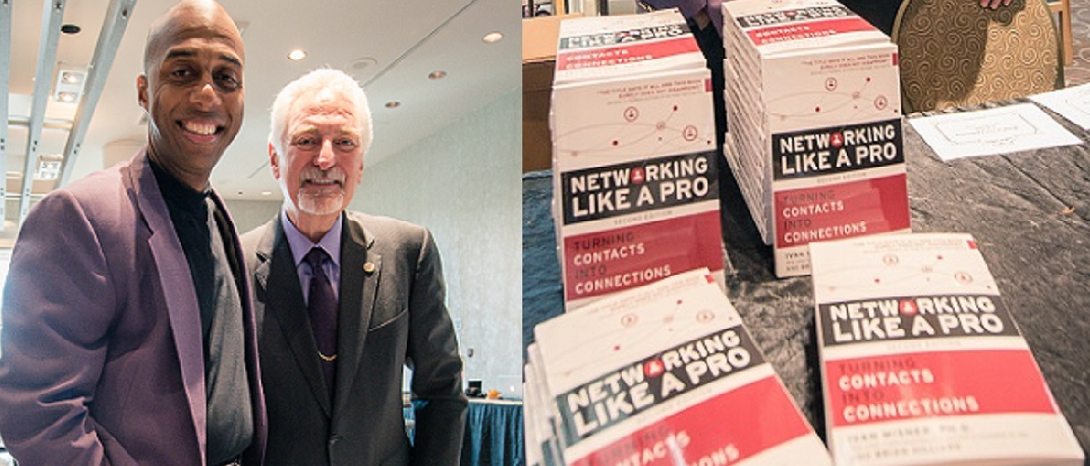
As we said in our book, Networking Like a Pro, networks are by nature, clumpy.  Human beings have a tendency to congregate and surround ourselves with people who are similar to us. . . whether by race, gender, religion, or professional status.  Unfortunately, this approach to networking has unintended consequence – namely, that we tend to form clusters.  This is why it is so incredibly important to be intentional about the way we develop our personal network.  A diverse personal network enables you to increase the possibility of including connectors to your network.  These are people who cross over in some way between two or more groups of people.  The best way to increase the number of possible connections in your network is to intentionally develop a diverse, heterogeneous network that has connections to other clusters of people.

If you go with the premise that relationships are the currency of today’s modern business person, then it stands to reason that having an ethnically diverse business network – comprised of people who look different than you – actually is the next logical step when it comes to building a thriving referral-based business.

But for a lot of people, especially those in the majority, the question becomes how.

In other words, how as a white businessman (or woman), can I diversify my network and get to know more businesspeople in the African American, Asian or even Latino communities? 

That’s a great question and one that, at first glance, can seem daunting to say the least.

But as with most seemingly complicated questions, the answer is quite simple: Be more intentional about it.

In other words, as a member of any ethnic group, the tendency is to spend time around more people like yourself.  So whatever ethnicity I am, I’m more likely to have friends and business contacts of that ethnicity.  And while that’s understandable, we feel that entrepreneurs who diversify their networks – based on ethnicity, gender and a host of other factors – are actually better positioned to be more successful.

As a matter of fact, McKinsey & Company did a report in 2015 (ā€œDiversity Mattersā€) which determined that companies having a high racial and ethnic diversity are actually 35% more likely to perform above their industry’s national median return.

So the question becomes what can we do to branch out and overcome the gravitational pull we all feel towards spending time around people who look like us? How can we, instead, become more intentional in our actions when it comes to actually meeting and engaging others in different communities?

Another great question…and we have some thoughts.

  1. Recognize that diversity is a process, not a program.Ā  In other words, diversifying your network has to be something you want to do and commit to doing on a daily basis.Ā  It needs to become part of your core beliefs that you’re going to be intentional about meeting and engaging people who don’t look like you.Ā  Anything less than that is almost guaranteed to eventually fail.
  2. Look at your phone and business contacts on social media.Ā  Do they all ā€œlookā€ the same in terms of ethnicity, age, education and gender?Ā  If so, then keep reading because you might have some work to do. As we said above, diversity is a process, not just a program. This has to be an ongoing process.
  • Consider volunteering for certain organizations which put you into contact with people who are different than you.Ā  This could be as simple as volunteering as a coach for a local sports team, scheduling some time to visit an inner city school during ā€œcareer day,ā€ or sitting on a local community service board.Ā  Just take it upon yourself to broaden the scope of contacts you have with various ethnicities.
  • Make it a point to talk to people who don’t look like you.Ā  This is one that I (Brian) personally started doing 2 years ago, and I love it!Ā  So as a black man in his 40’s who grew up in the North but lives in the South, I take it upon myself to talk to ANY white person who may or may not have the same education as me, orĀ  who may or may not be in the same physical shape as me, or who may or may not be originally from the North like me.Ā  And it’s not a question of patronizing people or anything like that…I just make it a point while passing them at the grocery store, walking to my car in the parking lot, picking up some Chinese food to say ā€œHey, how’s it going?ā€Ā  And depending on the situation, sometimes that leads to more conversation, sometimes it doesn’t.Ā  But it gets everyone out of their comfort zone for a bit engaging new folks.
  • Invite different people of different ethnicities to your networking group.Ā  If you’re in a local Chamber of Commerce or a BNI Chapter, this is a perfect opportunity for you to engage others and invite them to your group.Ā  For example, maybe you’re out networking and you see a person of color and you decide to implement Point #4 from above.Ā  Ok, then during that conversation, you let them know about your group and see if they’d like to attend.Ā  And that’s it.Ā  Super easy to do, and it is very intentional.
  • Make this a top down initiative wherever you are in the organization.Ā  For those of you who have employees in your business, this point is crucial.Ā  If you want to have diversity in your organization and be more successful as a business because of it, then you absolutely must take the lead and make diversity a ā€œthing.ā€Ā  Which means it is something that people value, something that people do, and something that you, as the leader, set as an example on a regular basis for them to emulate.
  • Hard-code diversity into the fabric of your business. Similar to the previous leadership point, if you’re going to be serious about diversity in your business, we recommend you seriously consider making it one of the core values of your company.Ā  Put it in your public material, address it when talking to your team/employees, and make it a part of the DNA of the organizational culture so people are crystal clear how you feel about it and how it plays out in your company.

It is important to note that there is a subtle but crucial difference between inclusivity and diversity.  You may have an organization where the members feel like it is very inclusive, but when you look at it from the outside, does it truly look diverse?  If not, you need to be more intentional about being inclusive to create diversity.  Diversity is a fact; inclusiveness is a choice.  Intentionally acting in an inclusive manner is what creates diversity.

Don’t beat yourself up if you’re not there yet…maybe you haven’t done these things as well as you could have.  But today is the day to start. It’s never too late to do the right thing.

Called the ā€œfather of modern networkingā€ by CNN, Dr. Ivan Misner is a New York Times bestselling author.  He is also the Founder & Chief Visionary Officer of BNI (www.bni.com), the world’s largest business networking organization.Ā  His latest book,Ā Who’s in Your Room, The Secret to Creating Your Best Life,Ā  is available at bookstores and at Amazon.com.Ā 

BNIĀ® Growing Forward Togetherā„¢ World Tour

We are very excited to present to you the upcoming BNIĀ® Growing Forward Togetherā„¢ World Tour. This event is the first global live event in BNI’s 35-year history. We will be streaming live to over 70 counties on July 14th, 15th and 16th through Facebook Live and YouTube Live. Dr. Ivan Misner will be sharing his vision for the future as well as insights for business growth and personal success. Book your place here: https://growth.bni.com/worldtourregis…

Restarting In-Person BNI Chapter Meetings

Dear BNIĀ® Members,

We are in the process of restarting in-person BNI Chapter Meetings in regions where local conditions make it possible to do so. We have been working with outside experts and are collaborating very closely with your National Directors and Executive Directors on the process of restarting in-person Chapter Meetings. You should expect to hear updates from them in the days and weeks to come, and please continue to stay engaged with them.

Our top priority continues to be your safety and wellbeing, while we also continue to support the growth of your business. In March, we transitioned over 9,500 BNI Chapters in 70 countries to BNI Onlineā„¢. This new innovative platform is exceeding our expectations in providing you with valuable referrals and closed business. In April and May alone, BNI online helped members pass over 1.5 million referrals that generated nearly $2 billion USD in Thank You For Closed Business. 

We are now making BNI Online even better with new features that we will share in July. Your BNI Global Support Team has been working relentlessly to modernize and improve other elements of your membership including the BNI brand, expanded communication tools, the BNI Business Booster Series with global thoughtleaders, and the continued development of advanced technology to help your business grow via BNI Connect, BNI Connect Mobile, BNI University, and BNI Brandshare. And we are just beginning. Stay tuned for a host of valuable enhancements to power your BNI Chapter, and to power your business.

We respectfully request that all BNI Chapters who are restarting in-person meetings graciously accommodate any Members in their Chapter who may not yet be ready to resume in-person meetings. Your Executive Directors can highlight simple ways to help make their participation seamless and easy. And for Members who wish to continue meeting with other BNI Members via BNI Online, contact your Executive Director for options on how BNI can help you do this. As we embark on this next phase, the role of the BNI Chapter Leadership Teams, BNI Director Consultants, and BNI Executive Directors will be more important than ever. Let us continue to thank them for the important work they do.

As I pledged in March, BNI will help lead the global business recovery. We will help rebuild businesses and communities. We will continue to be absolutely relentless in supporting every BNI Member throughout the recovery. You have our full commitment that we will not rest until these things are done. Let us now continue Changing the Way the World Does BusinessĀ®.

Onward!
Graham Weihmiller

Growing Forward Together

I am thankful that my work and personal travels have allowed me to experience many things and learn a great deal. One lesson that has truly resonated with me is: no matter our country, race, color, marital status, gender, religion, sexual orientation, age, ability, or politics: at our core, we are all the same. When we are young, we want the freedom to grow and pursue our dreams. When we are adults, we want to make an impact and build a better future for ourselves and our families. When we are older, we want to know that our lifetime of work was purposeful and will leave a positive legacy. These human desires are universal, and everyone should have an equal opportunity to achieve them fully. For its part, BNI always has – and always will – support all people in these worthy pursuits. I joined BNI because of its unique culture of caring and support that people have for one another. What other organization out there besides BNI brings so many people together across so many boundaries for such a productive purpose? BNI gives us a platform to be our best and to give of ourselves to others. We build meaningful relationships and extend our hand to help others grow and they in turn help and support us in the essence of Givers GainĀ®.


My goal is that BNI represents the beautiful diversity found in every country we serve. Beyond creating a more meaningful life experience, we know from Dr. Misner’s work that diverse networks are also more productive. Diversity is good business. For decades, BNI has encouraged diversity. We’ve implemented diversity training, diversified our marketing imagery and photos, carefully selected speakers from diverse backgrounds, written articles and created podcasts on diversity, mentored underprivileged students, incorporated our diversity statement into our leadership team training and communications, and launched a BNI Global Leadership Program to help advance diverse leadership at the organization. We are now expanding our mentorship program for underprivileged students, incorporating diversity into our strategic planning process, bolstering outreach to underserved communities, and augmenting support to the BNI Foundation which provides education & mentorship to kids in need. Click here to see a recent communication that Dr. Misner and I both shared broadly on Friday, June 12th. Together, we can do even more. If you have ideas, please share them with us by emailing diversity@bni.com. No idea is too big or too small.


The best solutions often start right in our community. You can help today. Today – right now – is a perfect time to diversify your chapter and extend a warm invitation to someone who may be different from you. Perhaps that invitation is an invitation to visit your BNI Chapter meeting this week. Perhaps that invitation is an invitation to visit a BNI Chapter meeting. Perhaps that simple invitation can change a life. Maybe the life that will be changed will be your own.

Together we can enhance the diversity of BNI and make a meaningful difference in all people’s lives.

At BNI, we are Growing Forward Together.

Onward!
Graham Weihmiller

You Are Not the Dumbest Thing You’ve Done in Life

If you ever feel like you’ve done a bonehead thing in business or life, this story might make you feel better.

The most memorable television interview I ever did was my first ā€œliveā€ interview — which was very nearly my last live interview.  

It was early 1995, and my first major book was hitting the shelves coast to coast. A cable station had invited me to talk about it on the Fairfield County Exchange morning show in Connecticut, right across the border from New York.  

My publicist called me before the show and said, ā€œDon’t forget that this is live. Completely live.  Whatever you say will go on the air (this was long before the notorious Janet Jackson disaster – now everything is tape delayed).  She also added that ā€œThey want you to do something visual for the show.ā€  

I thought, This is networking, not lion taming. What can I do that’s visual? Run up and down the aisles handing out business cards?  So I thought I’d put together a ā€œtool boxā€ with ā€œnetworking toolsā€ inside — badges, cardholders, and the like. Kind of goofy, but it was visual.  

Somehow it didn’t feel like it was enough. So while the New York area Executive Director for BNI, was driving me to the show, I came up with an idea. ā€œLance,ā€ I said, ā€œwhat do you think about a magic trick?ā€ I am an amateur magician, and I have a trick where I hide some flash cotton in my hand. I wave my hand, and a flame briefly flares up out of it. I happened to have it with me and I said, ā€œHere’s what I’ll do. We get to the end of the interview, the interĀ­viewer holds up my book, and I say to her, ā€˜Careful! That’s hot!’ And then I take it from her, and whoosh! Flames shoot out of it.ā€ 

ā€œYeah, that’s good!ā€ said Lance.  

A little while later, I was sitting in the green room at the studio. It was a large cable station, and the show was a big, 90-minute show with 10 guests or more. I was sitting there with Lance and a bunch of other people, watching the show on a monitor, waiting to be called, when this guy dressed like a Native American walked by. Then another guy walked by dressed like a cop. Then another guy, dressed like a cowboy. 

Someone joked, ā€œGee, it looks like the Village People!ā€  Everyone laughed and we all agreed that wasn’t likely. Then I heard the on-air announcer say, ā€œNext on the Fairfield County Exchange, the Village People! And (long-pause with less excitement) Dr. Ivan Misner to talk about networking.ā€ 

I panicked. ā€œLance,ā€ I said, ā€œI’m gonna die here!ā€  

I thought, better juice things up a notch. Make a bigger flame. So, I stuffed some more flash cotton into my palm.  

The Village People went on. I watched them on the monitor. They were great! They were fun! They were hysterical! They did ā€œY-M-C-A,ā€ shaping the letters with their bodies, of course. They were visual!  The audience roared, screamed, jumped up and down.  

I thought, I’m going on after them?  Are you kidding me, I’m going to bomb, I’d better use a little more of that flash cotton.  

The Village People kept the audience jumping and screaming for more. The show fell behind schedule. I knew my interview was going to be rushed. I was up next. I had the cold sweats.  

The producer came over and said, ā€œGet ready, we’re going to have to rush you on and mic you up.ā€  

ā€œOkay,ā€ I said. I took another pinch of flash cotton (just for good measure) and followed him out of the room. 

As the Village People came offstage to a rowdy standing ovation, I was seated in a chair in front of the cameras, half-facing the host and hostess. I was holding a copy of my book and I wanted to prepare them for what I was going to do. I said to the hostess, seated immediately to my right, ā€œHey, listen, when we get to the end of the interview, would you hold this up? Then I’ll say — ā€ 

At that moment, the director, who could hear us through her headset, walked over to us and said, ā€œNo, no, no, I don’t want her holding the book up. We have a JPG of the cover, and we’ll show it in another shot.ā€ 

As soon as the director walked away, the hostess turned to me and saw that I was panicked and said, ā€œI’m the host, I’ll decide. What do you want to do?ā€ I started to explain the trick.  As I got to the same point in the first attempt to explain, the director came back and said, ā€œI told you, I don’t want her holding the book up! Okay, we’re on LIVE in five, four, three ā€”ā€ 

The hostess whispered to me, ā€œJust go ahead and do whatever you’re going to do. I’ll follow along.ā€ 

So we did the interview. I thought it was kind of a lame interview with the toolbox thing, especially following the Village People, but I knew we’d have a great ending.  

As we finished up, she said, right on cue, ā€œI have here a copy of Dr. Misner’s book.ā€ She held it up. The director scowled. 

I said, ā€œCareful! That’s hot!ā€ I reached over, took the book from her, and opened it up. And WHOOOOSH! a gigantic flame shot up. Huge, I mean really big. A much bigger flame than I expected and the book caught on fire. 

The hostess screamed, ā€œAAAAHHHH!ā€ and she jumped into the lap of her co-host, waving her arms and hollering. The director was holding her head, yelling ā€œCut! Go to commercial!ā€ The cameramen were blinded by the flash and came out from behind their cameras. I stomped on the book, trying to put out the fire. The audience laughed hysterically.  Apparently I made quite an impression – just not the one I was hoping for! 

The hostess, still sitting in her co-host’s lap, said, ā€œOh, thank God I didn’t swear on live television!ā€  Her co-host looked off-camera, snapped his fingers, and yelled, ā€œWardrobe! new pants for her, please!ā€ 

I looked over at Lance who was just off stage.  He put two thumbs up and said, ā€œNow, that was visual!  But we should go now.ā€ 

In most places around the world, I may be considered an expert on networking, but in Connecticut, I think I’m considered an arsonist.  So, no matter how embarrassed you may feel by some stupid thing you’ve done in life – just think of this story and you won’t feel so bad. 

Called the ā€œfather of modern networkingā€ by CNN, Dr. Ivan Misner is a New York Times bestselling author.  He is also the Founder & Chief Visionary Officer of BNI (www.bni.com), the world’s largest business networking organization.Ā  His latest book,Ā Who’s in Your Room, The Secret to Creating Your Best Life,Ā  is available at bookstores and at Amazon.com.Ā