Submitted by Beth Misner, BNI Foundation Co-Founder and President
The BNI Foundation was recently approved by the United States IRS as a 501(c)(3) not-for-profit charity. As many of you will know, the BNI Foundation has been a donor-advised fund for the last 18 years as part of the California Community Foundation. While we transition from CCF to our own not-for-profit entity, a few things are shifting for us. The most exciting shift is the formation of our own Board of Directors.
Below is a list of the BNI Foundation Board of Directors and board roles:
Jeff Stay, Board Chair Andy Hart, Board Vice Chair Beth Misner, Board Secretary Michael Walchonski, Board Treasurer Graham Weihmiller, Board Member
The BNI Foundation welcomes these board members, and together, we are excited about the future of our company’s world-wide philanthropic work for children and education. Our next big update will be a brand new website which will reflect our new status.
Have you ever gotten an haircut… over the phone? Probably not. It’s just one of those things that you have to actually be present for. Well, it turns out – so is BNI. People join BNI to exchange referrals and increase their business. Intellectually, we understand that it is important to build relationships but it may not be obvious just how critical that is to the referral process.
We discovered the impact that attendance had on the organization many years ago when some BNI groups met twice a month. Yes, it’s true – some groups actually met twice a month back in 1985. Why don’t we do that now you might be wondering? Well, that’s an easy answer. We discovered that chapters that met twice a month passed 52% less referrals than groups meeting weekly!!! Did that really sink in just now? They passed 52% less referrals than groups that met weekly. That is a shocking statistic. When the groups were shown this hard data back in ’85, every single group except one switched to meeting weekly. The one group that refused shut down from lack of success a few months later. Consequently, since early 1986, all BNI groups have met weekly.
The co-author of this article, Beatrice Sparacino, found similar and compelling evidence as part of her recent theses from the University of Bocconi in Milan Italy. In her study, she looked at the amount of closed business compared to the number of absences per member in her region. As the graph below indicates, those members who had fewer absences are also the members who received more closed business. You can see in the graph that as the number of absences double, the amount of closed business a member generated actually falls by more than 50%! Does that statistic sound familiar? It hasn’t changed over the years. Less absences within a chapter, equal more referrals and more closed business. The data is compelling.
BNI is an accelerator for business referrals, reducing the time required to build relationships and trust between people. That trust enables you to receive referrals and obtain more closed business. In this sense, being present at your chapter’s meeting every week keeps you “top of mind” for all your fellow members.
Recently Massimo Osenga, a member in Vercelli Italy did a short training on the importance of being present to his chapter.He said that some time ago, he became very passionate about a famous reality television show. In particular, he really loved one couple competing in the show. He started following them on Twitter, Facebook and other social media. And then, the unthinkable happened. His favorite couple was eliminated from the competition and were no longer on the show. At first, Massimo was very disappointed. However, after a number of weeks, they were invited back as guests to the show. It was at that point that he realized that in that incredibly short period of time he totally forgot about his favorite contestants!!!
The old adage “out of sight, out of mind” is absolutely true also when it comes to referrals in BNI. Members who think that missing meetings regularly doesn’t really matter are clearly mistaken. The data is crystal clear. Miss meetings and lose business or make meetings and get business. The data is very compelling and has been since the start.
The choice is yours!
It’s up to you to decide what you want to get out of your Chapter experience.
Called the “father of modern networking” by CNN, Dr. Ivan Misner is a New York Times bestselling author. He is the Founder and Chief Visionary Officer of BNI, the world’s largest business networking organization. His new book,Avoiding the Networking Disconnectcan be viewed atAmazon.com.
Submitted by Sara Minnis, BNI Fast Track, del Fuego Companies
As a Leadership Team, one of the most important functions you will execute throughout your term is setting and tracking goals for your chapter. Pretty much everyone has been exposed to goal setting in their BNI chapter, business and life. For some reason most of us keep setting goals, even though it’s common that we don’t achieve them outright. For most of us, this reduces the impact of goals significantly. So, let’s take a look at the real reasons so many goals go unaccomplished, and then we’ll look in detail at three types of chapters, and the specific types of goals that we have found most effective for each one.
First, let’s review what happens in many chapters as new leadership comes on board, to give us a good starting perspective. Many Leadership Teams set goals because they are “supposed to” — it’s part of their job. And often the “supposed to” goals are simple percentages for improvement. For example, “we want to double our membership” and “triple our revenue”. Now, that type of goal sounds great, and it feels pretty good when you inform the membership. There’s a short burst of camaraderie and excitement in the room. But over time that enthusiasm slowly slides off the table, because there wasn’t a plan to make it happen. Plus, the goal was often set for the members, not with the members. Basically, with no buy-in and only vague ideas about the behaviors which could help them actually reach those goals, members lose momentum as the reality of achievement drifts further and further away.
Let’s set a common framework so we have a shared understanding about goals. In its best form, a goal is a target to aim for, that you can measure, and that fits the particular audience or individual for whom it is created. Goals that work are essentially designed to produce the behaviors needed for success. Goals are intended to be achieved. So, when you set a goal for your chapter and your membership, you have the chance to help them realize a more prosperous future, mold the behaviors needed to get there and build the culture needed to stay there.
How do you decide what goals are best for your group?
Goal Setting Based on the BNI Chapter Lifecycle
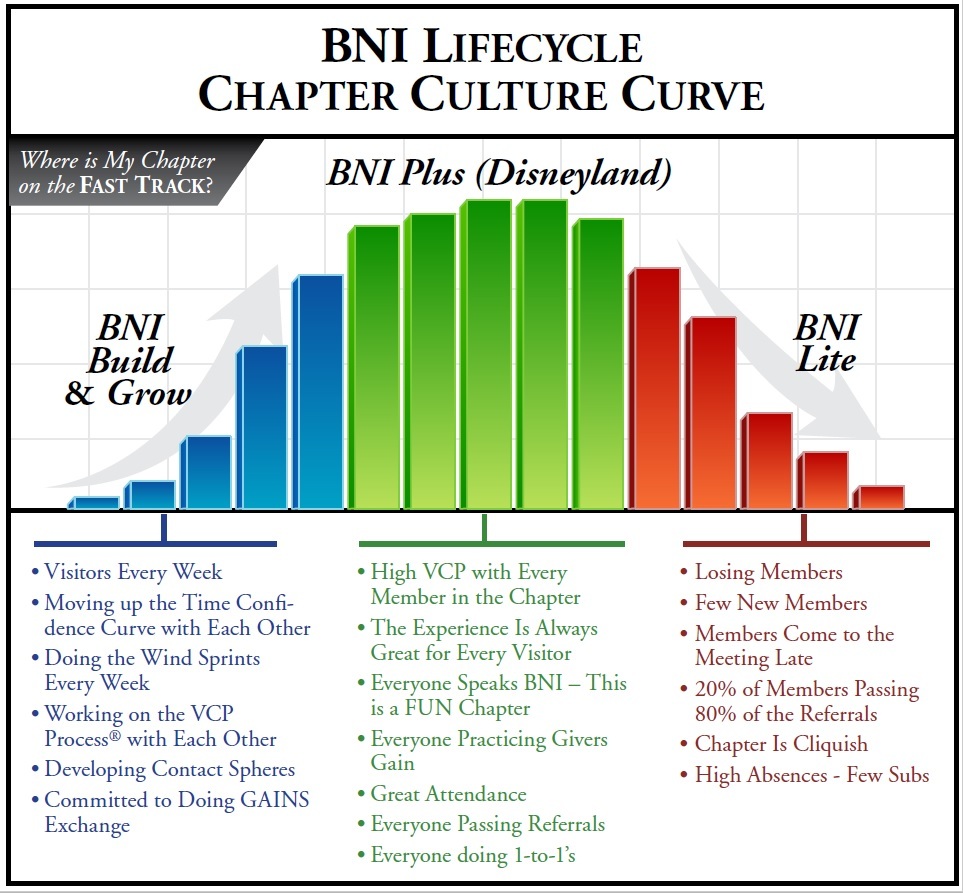
Effective goal setting relates meaningfully to the Chapter Lifecycle. Each stage in the Chapter Lifecycle benefits best from different types of goals, because there are different chapter characteristics and dynamics occurring at each stage. Let’s take a quick peek at the Chapter Lifecycle, and then we’ll explore the specifics of goal setting for each type of chapter.
BNI Build & Grow: Best Practice Goals Build the Team
You know your chapter is in the Build & Grow stage if it’s up to five or so years old, still very active in all things BNI, continuing to add qualified members regularly, growing individual revenue for members and attracting the right new members with a thriving chapter culture.
In this kind of chapter, goals should help members put best practices into place so that their BNI business team is developed with a solid foundation. Let’s look in detail at some of the possibilities.
Building the Winning Team. This goal is focused on chapter growth and building the team that will help all your members reach their goals. Yes, all entrepreneurs can benefit from BNI. Nevertheless, each chapter will win the most by selecting the right professions or industries to join, which will serve to accelerate referrals. Be choosy and committed to finding the right fit. Every chapter is different in terms of which members (and professions) are the best to add at any given time. Hint: What professions would make your Power Teams stronger or help you to create new Power Teams? Suggested Activity: Be strategic with who you invite and who you ask to join. Ensure that the member professions and your growth goals are achievable. We suggest aiming for a minimum of four to five new members at a time, plus what you would account for in attrition. Steady, organic growth produces long-term results and long-term members.
Create the Culture. In a Build & Grow group, this is a fun way to recognize and encourage the behaviors that help everyone reach their goals, and that serve to establish a thriving chapter culture. Member-by-member, as you celebrate the behaviors you want to see, everyone takes notice of what’s expected… and your culture will flourish. Suggested Activity: Choose a behavior you want to increase. Some examples include: number of one-to-ones with members resulting in referrals, most easily understood Target Market, best inviting member, and most referrals for a Power Team. You can also utilize group competitions that run every six weeks or so, to focus on these areas. Remember, what you celebrate and recognize increases! For most impactful results, choose areas that affect one-to-ones, increased referrals, and increased membership.
BNI Plus (Disneyland): Stretch for Big Goals to Keep the Excitement & Money Growing
You will know your chapter is a BNI Plus chapter if it is five years old or more, has had a fairly stable membership of at least thirty to thirty-five members for a period of time, has mature referral relationships among members, and is successful in terms of traffic lights and TYFCB. Of course, this kind of chapter can also get a little too comfortable, and when that happens you’ll begin to notice smaller increases in revenue (both per member and in the chapter overall), pockets of big producers and others who make very little revenue, and plateaued visitor numbers and member growth.
This chapter feels good to most members, so goals can almost seem like an unnecessary burden to those who are seasoned, successful and content. A great comment from one of our Leadership Teams on the Fast Track describes this challenge: “Complacency is the enemy of success.” Another way to think about it, which is indicative of why different goals are so crucial, is this: “It takes something different to stay at the top of the mountain than it took to get there.”
Let’s look at the type of goals that can help this group stay alive and thrive, not plateau and slip.
Think BIG. This is a group that will benefit from a stretch goal. This is a goal that seems a little bigger than possible. We don’t often recommend stretch goals, because it can be demoralizing when they aren’t achieved, and they are often unrealistic for chapters who aren’t in this stage. But for BNI Plus chapters, stretch goals can really serve to pull the group onward and upward! Suggested Activity: On an individual basis, focus on an increase in referral partners and revenue. You can focus on gaining two or three more referrals in each referral relationship, or ask members to start creating a referral relationship with their most “unlikely” referral partner in the chapter. This is a fun one, and demonstrates the true power of BNI. On a chapter basis, set a total revenue goal that is still based on the total of the member’s Revenue and Referral Goal, plus a bit more. It should have a big feel to it. Many chapters do this the first time they become a million dollar chapter. After that, the Leadership Team needs to decide what other goal feels big, but is achievable. Goals that are too big quickly go by the wayside. So go big, but keep it doable and measurable.
Strategic Growth with the Right New Members. This group can also benefit from goals that build a thriving team culture. This means building the chapter culture that attracts the type of member you want. When you are building this kind of culture, think of goals centered on Power Team development and success. However, don’t get too hyper-focused on Power Teams – members should still be encouraged to develop relationships with the rest of the chapter. When you combine Power Team focus with integrating all of your members into one big Power Team, your chapter gets fundamentally stronger in the long run. Suggested Activity. Think about your Power Teams. What new members and professions would amplify their success? Are there members without Power Teams, and could the chapter help create new ones around them? To balance the Power Team activity, have a competition for which Power Team passes the most referrals outside of their team. Or, which Power Team generates the most money for members not on their team.
Make Attitude-Attitude-Attitude the Cultural Standard. Another aspect of building chapter culture is to stay focused on shaping that winning combination of Attitude at the Leadership Team level, Attitude at the member level, and Attitude in the invited guests. Nothing demonstrates success like happy, energized members making money. Are your current members displaying the BNI traits that help to attract new, dynamic visitors and members on a consistent basis? What kind of visitors are you attracting? Are you being choosy when selecting new members, or are you accepting every application? Suggested Activity: Have an Attitude Meter on a board visible to all members, and rate attitude on a weekly basis. You could also appoint an Attitude Mascot. Reward positive attitudes with fun prizes. Have a good time with this!
Fun Competition Breeds Success. In BNI Plus chapters, frequent initiatives like little competitions and random recognition keep the group on fire. What you want to do is recognize the behaviors you intend to encourage and increase among all members. Also, don’t forget to celebrate members even when they don’t expect it. Random recognition inspires members to make the best BNI behaviors natural and habitual. Suggested Activity: Here are a few ideas you can start with, and the key is to make it meaningful for your chapter and your members. Think about fun little prizes you could present to the winners.
Never Texts During the Meeting
Best Target Market Specification
Always 1st to Greet Visitors
Passionately Passed the Most Referrals
Can Be Counted On for Anything
BNI Lite: Think Recovery Goals to Get Back on Track
If your chapter has reached this stage, either from a slow decline as a previously big and happy chapter, or from never really getting an effective lift-off in the beginning and continuously struggling to retain members, the good news is that you can build up from here to stable and consistent success. The most important step is to reach alignment throughout the chapter that everyone is committed to do what it takes to grow, and to do it with incredible energy and fun! We have seen many very, very (very!) small chapters take on the challenge to grow and make it. It was the commitment, dedication, and energy for the effort that laid the foundation.
Then, once alignment is in place, the key for these chapters is to establish small, step-by-step goals attached to specific activities for each member. The consistent effort of a small, dedicated group of individuals has the power to build back the team. They often end up with excellent, thriving chapters because they established particularly healthy chapter habits and dynamics in the rebuild. Below are some examples of goals to focus on at this stage.
Yes, You Must Grow. Member growth for the chapter is the most immediate priority for BNI Lite. But the key to make it happen is to ensure it’s doable – you don’t just need a growth goal, you need bite-size chunks attached to specific activities for everyone. When the goals are small enough, they really feel and are possible. You need the opposite of stretch goals at this phase. When the goals are attainable and they are being met, members see the growth happening and become even more motivated to stay the course. Then the energy starts to build on itself and magic happens. Think of your chapter like a little engine – you will start by experiencing short spurts of energy and accomplishment, and eventually you’ll reach a powerful, sustainable hum! Suggested Activity: If the chapter has slipped below twenty members, think of adding members in increments of two or three at a time with sequential stack days. Assign teams to work together on inviting. We have found there is often more accountability and synergy when they do. Goals for member growth could be something like, “Let’s add three new members in the next six weeks.” Remember, depending on conversion rates and chapter dynamics, this can mean actually asking up to twenty-five people to arrive at these three new members. Then take a breather, assimilate the new folks, and do another six week run for another three members. Within three months, you will have added six members! We have seen this strategic approach work many times in our Fast Track Visitor Experience Program.
Keep Morale High. One of the most important areas to focus on in BNI Lite chapters is keeping the morale high, and encouraging members to keep the faith. Setting and reaching small goals helps with this, so that members can have some wins. In addition, many times when chapters have lost members and are feeling small, they forget all the intangibles that belonging to a great business team offers. To keep the fires burning, you can highlight some of those softer outcomes that members are experiencing. It helps everyone to focus on the positive. Suggested Activity: Have each member think about three things that belonging to the chapter has offered them. Tell them to be prepared to share these with the group. Choose two or three members each week to share – you can draw cards from a hat or just call on people. Some examples might include: “I have a group of people that care about me,” “Knowing the challenges that other members face helps me understand this is a normal part of growing a business,” “I’ve had really good advice about my business from members here”, or “Just having this meeting to come to is a big factor in my commitment to my success.” Big Hint: Visitors love to hear these things, which they may not have thought about, but can often be the tipping point in deciding to join your group!
Ask for Support from Others. Consider asking for help in the form of inspiration, tips, and advice from other chapters. Do you know of other chapters in your region who are building and growing or experiencing BNI Disneyland? Talk to your Director and other members in your region. Invite other chapters to become part of your chapter’s success. The fundamental philosophy of BNI is Givers Gain – and this is a great opportunity for bigger, successful chapters to give back and support their region as a whole. Don’t be afraid to ask others to take your chapter under their wing, help you with visitors, and illuminate your chapter’s future and what’s possible in BNI! Suggested Activity: Choose two or three (or more) chapters, and have different members visit them and report back on what they experienced and how you could replicate some of those aspects in your own chapter. You could also request targeted support from other chapters with inviting visitors. Remember to be specific about the type of members and professions that would make your chapter strongest right now. Many times chapters who are large and successful have their chairs filled, but they are great at inviting for you, because they are experiencing BNI Success NOW!
So, there you have it — different goals for different stages in the BNI Chapter Lifecycle. If you’re not sure which stage your chapter is in, click here for a checklist we created to help you decide. We also did a resource call on this topic, and you can click here to listen to the recording.
As we close out this article, we have some final tips for you on chapter goal setting. We’ve learned a few things after working with hundreds of chapters and Leadership Teams over the last ten years:
With all goals, the more specific they are, the easier it is to measure progress and adjust the targets as needed;
Keep goals front and center each week. We know chapters that create and display Goal Boards always achieve more;
If you are not making progress on your goals, make a plan that helps you adjust your goal to an achievable one;
When you tie goals to the activities that work to accomplish them, you can always increase or decrease the activity to make progress toward the goal.
Here’s an example of how easy it is to adjust when your goals are tied to activities. Let’s say your goal is to have five visitors at your next meeting. You think that you need to invite twenty visitors to get five to attend, because you guess that one person will attend for every four people you invite. However, you find out that you invite twenty visitors and only two attend. That means your ratio is not what you thought, so you will need to invite ten visitors for one to show up. Adjust the number of your invites, and meet your goal! Once activity is associated, goals become part of real-world formulas, not “pie in the sky” thinking.
We have one last piece of information for you, and it’s one of our favorite anecdotes about goal setting. Did you know that all planes are consistently straying off course between their destinations? It’s true, due to all kinds of factors like wind and weather. It is the pilot’s job to track the progress toward the target and adjust as necessary to bring the plane back on course. The goal stays the same, but the behavior can always adjust. When you are on the Leadership Team, you are the pilot for your chapter. When you apply smart, targeted goal setting and you expect to track and adjust behavior as you go, you will reach your destination!
Questions about your chapter or how to make the most of your term on the Leadership Team? Feel free to contact Sara Minnis directly at sara@delfuego.com or 512-736-8716.
You can also visit our website at bni.delfuego.com for more information and free resources for all BNI members.
Submitted by Paul R. Scheele, Ph.D., Learning Strategies
The late William Perry, professor of education at Harvard, used to say, “Whenever someone comes to me for help, I ask myself: What does this person really want. And what will they do to keep from getting it?”
Even when we want to adopt a new behavior that’s aligned with our goals, we often generate the very obstacles that prevent us from achieving them.
It could just be that you’re not clear on exactly what to do. Or at some level you feel uneasy about actually making the change.
These obstacles can kick in with any plan for behavior change. The change might be a small one, such as driving a new route to work, or a major commitment, such as adopting a daily exercise program or meditation practice.
Whenever you plan to change any behavior, make sure that you “sign on” at all levels of your being. Let your intention become crystal clear. Feel the benefits that will immediately flow into your life.
Make your planned change so vivid and valuable that it resonates in your heart. Let the readiness to change sink down into the very muscles that will soon move in new ways.
Experiment with these suggestions:
Think of a model—a person who consistently demonstrates the behavior that will help you achieve your goal. Imagine that person in front of you right now, performing the behavior with mastery.
Carefully check your feelings to make sure that this is what you want. Ask yourself, If I could have this resource as my own, would I choose it? If your feelings say no, then modify the behavior until it’s just right.
Now focus on the subtle details of this behavior… the posture involved… the rhythm and tempo of the movements… the quality of the voice… how facial muscles move when your model speaks.
Now put yourself in place of your model. See yourself doing the exact behavior that your model demonstrated. Feel yourself using the same muscles… the same posture… the same movements… the same voice.
As you repeat this visualization several times, completely accept the new behavior. Know that it will serve you in positive ways. This rich resource is already available to you whenever you want it.
To help you construct neural pathways in your brain that enable the new and successful behaviors you want to adopt, I recommend you listen to an audio program I created called New Behavior Generator.
This program includes two sessions of the unique Paraliminal technology of personal achievement. Simply push play, close your eyes, relax, and listen. You will be led through a closed-eye process that activates your “whole mind” with a precise blend of music and words to help you acquire new behaviors.
To learn more about New Behavior Generator and the 41 other Paraliminal programs, please click here. Other titles in the Paraliminal library include Anxiety-Free, Deep Relaxation, Focus & Concentration, Self-Discipline, Peak Performance, Power Thinking, and Success Built To Last.
I have been a member of Gravesend BNI (Kent, UK) for nearly 5 years. I’ve put together a very successful A Team and want to share how the power of BNI Power Teams has impacted an event I am involved in with my other business head.
I am also a keen owner of a Volkswagon (VW) T5 Camper van and passionate about VWs. I was on a forum on Facebook at the inception of the VW M25 Run The Ring event and offered my marketing and PR expertise to John Emberton (MD of National Lock & Safe in Watford). He took me up on my offer.
Early morning on September 25, 2016, a whole load of VW owners will be cruising around the M25, ‘running the ring’ to not only have some fun and be part of this never done before cruise, but also to fund raise for the Teenage Cancer Trust.
“Back in March, I had to find a map for a work project and stumbled across this picture, which amused me,” said John. “I then put a joke post on a VW Facebook forum ‘Anybody want to run my ring?’ These posts lead to many of the members saying what a great idea. I realized then that this could be one of the longest cruises of VW Transporter Vans ever seen in the UK so I started a new group on Facebook called VW M25 Run the Ring.”
I proposed to him that the event needed a logo and also merchandise, and I knew just the guys who could help with this. I then introduced Neil Claydon (Promo-Bound BNI Gravesend member) and Richie Bennett (Graphic Designer and member of Brands Hatch) to John and roll forward to now… we are the A team! I am heading up the marketing and PR, Neil is head of merchandise, and Richie has worked not only on the logo, but branding for the clothing too – a match made in heaven!
The event will take place at 8:30 am on Sunday, September 25, and is open to all VW owners – Vans, Campers to Beetles. Our entrees will join the M25 at 4 various service stations – South Mimms, Lakeside/Thurrock, Clackets and Cobham (TBC). Once they have completed ‘the ring’ they will be rewarded with the knowledge they have taken part in something spectacular and for a great cause.
The website www.runthering.co.uk has recently launched, where those interested can enter the cruise, donate, purchase merchandise and secure their place.
“We want to create the longest cruise of VW’s the UK has seen and whilst doing it, raise a load of cash for Teenage Cancer Trust,” said John.
Submitted by Dan Swider, BNI Vermont Chapter Launch Director
One of the great things about BNI is our Mentoring Program. Chapters with strong mentoring teams consistently see better member retention. This is because new members are not left to just figure BNI out. How many of you know that there is also a Current Member Mentoring program? Now, how many of you are saying to yourselves, “Self, I have been doing this for a few years and I am darn good at referral marketing”?
It is pretty safe to assume that in BNI we are all pretty good at what we do. After all, that is how we got through the interview process to become a member in the first place! That said, almost none of us are experts at referral marketing.
I know in my own membership, asking for a mentor in my third year changed my entire membership. I was struggling. And getting a perspective from another member on how to be better at this was a huge boost for me. Keep in mind, no mentor is going to tell you how to run your business. Current Member Mentoring is about becoming a better member and getting a better return on your BNI investment.
Maybe you are in the second year of your membership and you have the basics down. Have you asked someone for a perspective on how to take it to the next level? I would bet after a year or more in BNI, you may have an entirely different set of questions then the ones you walked in with day 1. Have you reached out to your Mentor Coordinator and asked them to assign you an available mentor?
Current Member Mentoring is set up to be driven by the member who has questions or wants to improve as a member. There is a plan in place and people in your chapter trained to help you. The first step in becoming a better member is asking!
Submitted by Sara Minnis, BNI Fast Track, del Fuego Companies
Welcome to the first article in our ongoing Leadership Team Series!
As all good leaders learn along the way, ?Knowledge is Power.? And you don?t have to be a Boy Scout to agree with their motto, ?Be Prepared.? So it stands to reason that as the leader of your BNI troop, it?s important to understand where you are on the Chapter Lifecycle, and how it may impact your term.
The first step in great leadership is to truly understand the structure and character of the team you are leading, and the Chapter Lifecycle helps you do just that. Different types of teams will require different approaches and timelines in order to achieve the same outcome. And in BNI, we can all can agree that the result we want is chapter growth, lots of referrals, and business success for everyone!
We?ve learned through many years of coaching chapters that there are three different stages in the BNI Lifecycle of Chapter Culture. Moreover, we?ve observed that Leadership Teams who truly understand where their chapter is on the curve are in a much better position to develop winning strategies which help their chapter succeed.
Take a look at the graph below, and think about where you would place your chapter. Then read on for specific information and strategies we recommend for Leadership Teams in each stage.
The BNI Build & Grow Chapter
This chapter is often younger (up to 3 years or so in age), and is doing everything the BNI way! One-to-Ones, meeting structure, inviting, growing? and there is excitement, fun, and lots of positive energy in the room. You definitely know if you are in this kind of chapter.
The challenge at this stage is to continue the momentum and nurture the thriving culture, as your chapter members practice the behaviors that consistently encourage positive growth and results. The one accomplishment that your term can focus on is exactly how you plan to maintain the success. What we know is that these three areas are always important:
Clear Goals.?Why? Because we all do more when our target is specific and clear. Without it, how do we know where to aim? It helps us to focus our activities and our energy. Without goals, a chapter moving forward at this stage can begin to scatter and experience a loss in both momentum and membership.
A Culture of Learning.?Chapters that value and provide consistent education for members experience several benefits. First, their members are excited and empowered, because they?re actually learning how to get good at referral marketing, and specifically how to build referral relationships in the chapter. Additionally, the concepts in this type of education can often be applied to members? businesses directly, therefore extending the value of their BNI membership. Plus, learning together is a team building activity. And as if that?s not enough, we find that education and training become a big selling point for visitors. They say, ?I can see the potential this group has for my business, and they?ll teach me exactly how to reap those benefits? Where do I sign up?!?
Chapters in this stage are still learning how to do BNI. And we consider that a positive! While everyone is open and willing to study the BNI playbook together, it?s the perfect time to institute best practices and build the habits that will make your team successful. Believe us? introducing accountability later in the game can be much more challenging! We have seen time after time that establishing the good behaviors of BNI in the Build and Grow phase pays huge dividends as your chapter continues to mature.
If you?d like to hear a chapter at this stage in action,?click here to listen?to our Fast Track Friday Call with The A Team.
The BNI Plus (Disneyland) Chapter
The BNI Plus chapter is like Disneyland to both members and visitors ? the whole shebang is functioning perfectly, the energy is fantastic, and everything?s in tip-top shape! In our experience, chapters in this stage are somewhere from 4 to 19 years old. (Yes, we?ve worked with chapters that ?old? who are still thriving in a big way!)
The key to this type of chapter is that it?s stable. Other hallmarks include a vibrant culture, friendly energy, consistent inviting habits, members making money, and low attrition rates. Basically in this type of chapter, it?s ?All Good!?
So, if you?re thinking of being on the Leadership Team for this kind of chapter, consider this statement and make your plans accordingly: ?It?s one thing to get to the top of the mountain, but it?s a whole other thing to stay there!?
What does that really mean? For most of us, it means that the ?thrill? of getting to the top and being successful starts to fade a bit once we?ve achieved the objective. When we reach our goals, we start to celebrate, as we should! We start to feel like we?ve mastered all the methods that helped us get there. So we do a little less learning, a little less striving. This type of slow-down is natural and appropriate for a time, but if we?re not careful we actually become so comfortable that we stop doing the activities that got us to the top in the first place. And then the dreaded backslide begins.
If we want to stay at the top of the mountain, we need a new set of tools, strategies, and benchmarks created specifically for our revised objective. And the same applies to BNI chapters in the Disneyland stage. New goals are especially important to help to raise the bar, reset momentum, and encourage the continuation of the activities and behaviors that led to success.
In our experience, seasoned and successful members can really benefit from a review of the BNI Fundamentals, and a reminder of the concrete elements that make BNI work so effectively. Haven?t you found that if you read a book or watch a movie more than once, you pick up things that you didn?t ?catch? the first time around? Well the same is true for learning the basics of BNI. One of our favorite things to hear, especially from long-term, veteran BNI members is, ?I?d forgotten that piece?? or ?I understand this so much better now? this time it really clicked!?
Looking for more strategies for the BNI Plus chapter? Here are two more quick suggestions:
Sometimes a focus on 2 or 3 new referral partners, instead of the easy or comfortable ones, can be helpful for injecting energy and drumming up new business.
Concentrating on referral feedback, that is, what?s really happening once referrals are passed, can deliver a big boost to better quality referrals.
The key to all of this is helping the chapter understand why any of the above are necessary. Most people don?t think about doing anything when the ?Livin? is Easy.? Helping your members see that continual effort at achievement is the way to stay at the top helps them remain motivated and engaged.
One more tip ? this chapter thrives on leadership with Attitude, Attitude, Attitude. Think of this as your All-Star Team, needing to stay on point and practice new plays for next season!
Listen to a BNI Disneyland chapter for yourself ??click here?for our Fast Track Friday call with BNI Premier.
The BNI Lite Chapter
This is a chapter where membership is low, the chapter has a high attrition rate, and members are struggling to invite visitors. Many of the wonderful BNI components aren?t effective, because the low number of members keep what?s needed in referrals from being possible.
Surprisingly, this stage can occur at any chapter age. Even in year one, if the chapter struggled at launch and never got any traction or momentum. Then it just becomes a weekly struggle. Very successful chapters can also reach this stage ? even after BNI Disneyland ? if they rested in a loooong comfort zone and then ?suddenly? (not really) lost many members. The roads to BNI Lite may vary, but the needs for a chapter in this stage are the same. It?s time to re-invigorate, re-commit and grow.
If you are on the Leadership Team in this kind of chapter, it is critical to get everyone on the same page?as soon as possible,?and present a specific plan for improvement that involves all members. Often a BNI Lite chapter has some accountability issues, so tightening those up immediately is essential. Why? Because in this type of group where members are being asked to put in extra effort to develop the chapter, everyone feels more comfortable when a firm structure is in place and the same rules apply to everyone.
One of the big keys to success with a chapter at this stage is to not be overwhelmed by attempting to do everything at once. A few specific goals that are easily achievable work best. We all do better when we can achieve the goal we set, rather than face another little defeat.
Here?s a great example of this in terms of chapter growth. If a chapter is at 13 or 14 members after sudden attrition, setting a goal to grow to 30 is usually overwhelming for members. That?s because in most cases it would involve getting at least 75+ qualified visitors to the chapter meeting, and that would mean inviting 350-400 people. That?s about 30 people per member? which is so much more than we think we can do, so our insides just quit. It?s much better, for example, to aim for growing to 20 members in 6 to 8 weeks. Then take a little breather for 3 weeks or so, to let the new members get their feet under them, and then do another little surge. Smaller, achievable goals for member growth are really helpful at this stage.
Our other tips for chapters in BNI Lite include continuing education on the BNI Basics, with the members focused on really understanding their revenue and referral goals. This will help them get motivated to actually?want?a bigger chapter, because they?ll see how that can impact their individual goals.
We also see that really reinforcing one-to-one?s and referrals has a significant impact. This can again be achieved with smaller, attainable goals. Need some examples of basic goals that don?t overwhelm? How about 1 One-to-One with another member per week, and 1 referral per week? When we ask BNI Lite chapters to undertake these minimum goals, it?s a big step toward creating accountability in the chapter, as most members have stopped doing the basics that actually make BNI work!
The key to achievement is being responsible for the activities that lead to results. Focusing on results only, without a plan of action, can be demoralizing. If your members don?t know what they need to DO to meet the chapter?s goals, and there?s nothing in place to support their efforts and help them?practice the behaviors?they need to get there, they are much more likely to get discouraged or even give up.
Believe it or not, it is actually very exciting to be on the Leadership Team for this type of chapter! You have a huge opportunity to make your mark on the group. If you can achieve buy-in from everyone, introduce a proven strategy, and build a business-focused group poised for success ? then you are not only making a difference for the group, but also mastering a new level of leadership skills which you can utilize in your business and your life.
We have many stories of chapters who struggled in the BNI Lite stage, until a small team of leaders formed and executed a plan with vision, commitment, and determination! As Larry the Cable Guy would say, ?Get ?er done!?
For one great story with a chapter going from BNI Lite back to BNI Plus,?click here to listen?to our Fast Track Friday call with Masters of Business.
The BNI Lifecycle is a powerful tool for Leadership Teams to assess and manage their chapters. We often use the Chapter Culture Curve as we coach teams who want more out of BNI. If you?d like to talk more about your team specifically and how we?d recommend using this tool for success,?contact us?? we love talking with Leadership Teams and we?d be glad to set aside some time for you.
Once you know where you are in the Chapter Lifecycle, you can understand how powerful a system like?BNI Fast Track?can be for your chapter. With education and training in the BNI Basics, getting everyone on the same page, goal-setting, and action-based team practice week after week, it?s a proven way to turn your chapter into a money-making business team. We?ll look more closely at how Fast Track impacts chapters later in the Leadership Team Series.
You walk into some chapters and they are on fire! They are energized, goal-oriented, thriving, and most importantly they are reporting high dollar values with their Thank You for Closed Business (TYFCB). While others are basically on hold, just going through the motions, doing the minimum, and getting average results. Then, there are others that just seem to be “in a hole,” always struggling with attendance, not holding members accountable, not excited, and having difficulty maintaining strong membership.
Stop for a moment and think to yourself – where is your group relating to these three phases. Be honest – where do you think your group stands?
If you think your group is on fire – then let me congratulate you. That was my vision for what a great BNI Experience should be about. If your group is on hold – trust me when I say that it doesn’t take a lot to move from this phase to on fire. I’ve seen many groups do that in a short time. If your group is in a hole – don’t despair. You can be an incredible group. Believe me, I have seen it. The exciting thing is – it is actually possible to leap frog over the middle right to an on fire group fairly quickly with the right Leadership Team and a full commitment from your members.
All groups go through cycles or phases. It happens. It’s ok. The key – is to recognize the cycles and know when it’s time to up your game. Why accept mediocrity, when excellence is an option? Excellence is an option and I see it every day in BNI chapters around the world.
Let’s look closer at the three phases:
On Fire Groups: These chapters are not willing to settle for mediocrity! They are the biggest, the best, and the most productive chapters for members to be in. Their Leadership Teams are committed to the BNI policies, guidelines and the system. Their members attend virtually all the trainings offered by local region, often over and over. You will find many members with several ribbons attached to their badges denoting the many roles they have held in the chapter: Visitor Host, Education Coordinator, MSP Graduate, and so on. These members often quote BNI Podcast episode numbers to me when I meet them!
Most of the members in these groups have fully completed their BNI Connect profiles, including member testimonials, badges and CEUs from the many trainings they have attended. They are actively passing referrals online and reporting them to the chapter at each weekly meeting. It is common to hear many stories from these chapters about extremely lucrative connections. They always report far higher TYFCB than their counterparts in the same region.
The excitement level at their chapter meetings is simply electric! Chapters in this phase exude high energy and a very positive attitude. The chapters are likely to try most or all of the ideas offered by their Director. They effectively utilize one-to-one’s, worksheets like the GAINS Exchange, or the Chapter Reality Check, and they have almost full attendance at Member Success Program training. They use Meeting Stimulants developed by BNI and their Education Coordinators regularly review BNI SuccessNet articles or the BNI Podcast episodes each week.
In addition, they tend to operate in a very friendly environment, have a great culture of support and positivity, have more members than the average, generate a lot of referrals, and enforce accountability in the group. They are there to do business, but they also understand the importance of adhering to a structure. Most importantly, they don’t let either business or structure get in the way of having fun and developing close relationships.
On Hold: In this phase chapters have become somewhat complacent. They may have been in the on fire phase at one time and lost some of the spark that made them successful, or they may be a smaller chapter that has begun to give up on growth and has accepted the status quo.
A chapter that is going through this phase tends to believe that things are okay as they are and don’t have any pressing desire to work on enhancing their meetings or developing the quality or quantity of members. They may feel like the amount of business they are doing is okay, even if it is not that great. They may take some suggestions offered by their Directors, but they are just as likely to dismiss other suggestions, because they think they don’t apply to them or they feel they know best. They tend to follow many (but not all) of the policies and the basic structure of the meetings, but they have lost the enthusiasm and spirit that makes for a great group.
In a Hole: Chapters in this phase tend to have numerous problems. Attitudes, referrals, and attendance are all lower than the groups in the other phases I’ve discussed. Unfortunately, most of the membership is focused on the problems and not on positive solutions. I have found that when chapters focus on problems and not the solutions, they become an expert on the problems. This is where these chapters live as a group.
They tend not to follow the agenda, structure, and/or policies. In addition, they tend to view their local Director as an outsider, rather than a resource to coach and support them to make the BNI process work. They tend to make many exceptions for the actions of their members and generally seek the path of least resistance relating to the way they apply policies and procedures. It’s hard for them to grow and succeed until they have a reset of the mindset. That process begins by recognizing the phase they are in and working with their Director to get back on track.
Almost all chapters go through the phases or cycles listed above; however, the really successful chapters tend to spend more time in the on fire phase than either of the other two phases. Once again, consider where your chapter is in these cycles. A good tool to use is the “Rate Your Chapter” worksheet. If you determine that you are in the on hold or in a hole phase, contact your Director to get some suggestions on how you can help the group achieve excellence.
BNI has thousands of groups in dozens of countries. With that many groups, we have landed on the right combination of passion, structure, accountability, and culture to make groups work. Don’t reinvent the wheel! The process works very well for the chapters that effectively use the tools and assistance that BNI provides.
As important as passion is to success, I believe that passion alone does not produce results, passion and commitment produce results!
I’d love to hear your thoughts about these cycles. Have you experienced them? How did you move up the ladder? Sharing your experiences can help other members achieve success.
Submitted by Beth Misner, BNI Foundation Co-Founder and President
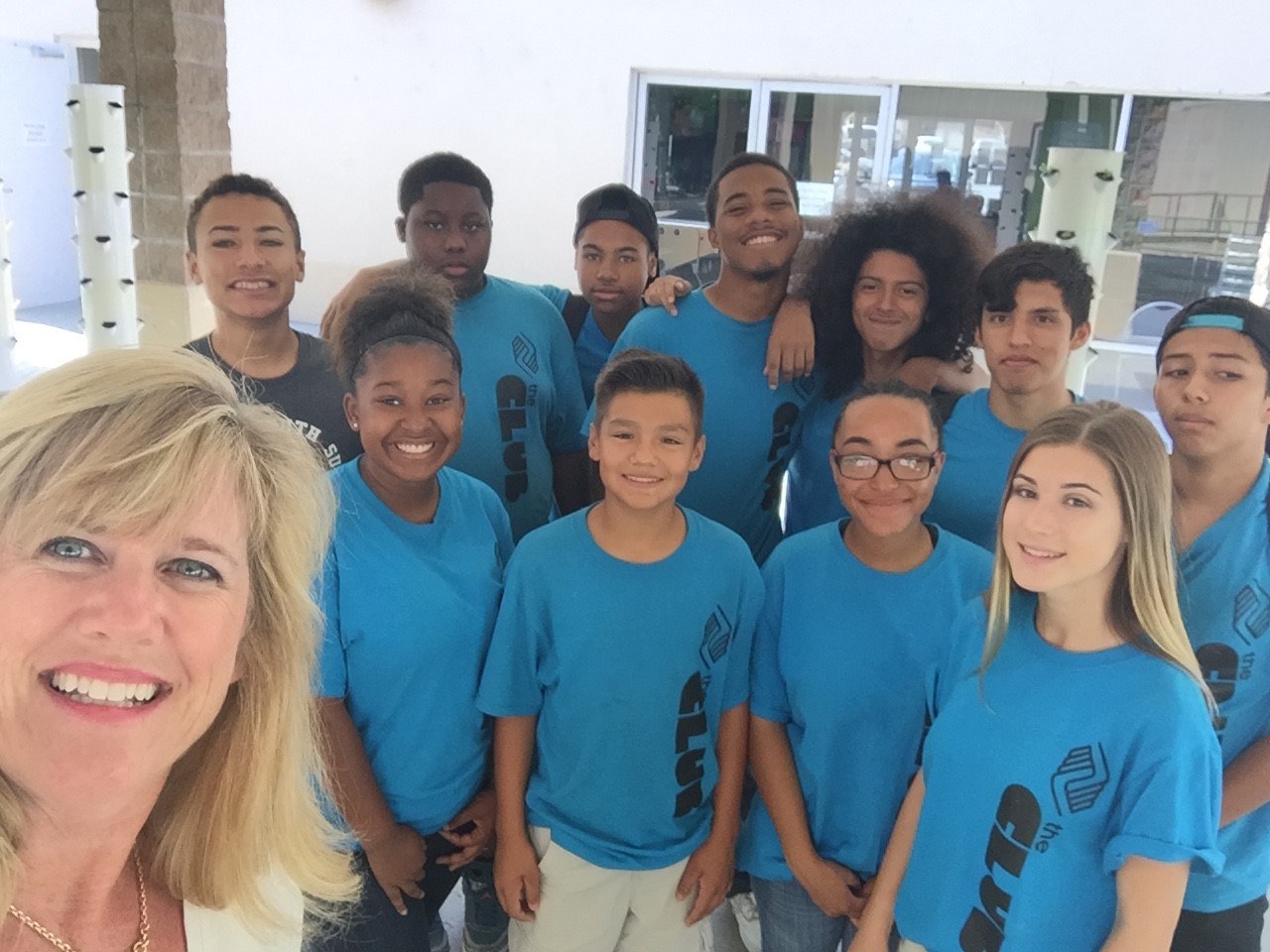
The BNI Foundation donated a $1,000 Givers Gain Grant to the Vacaville, California Boys and Girls Club so they could purchase three Tower Gardens by Juice Plus. The Tower Gardens taught the kids about growing organic vegetables, harvesting vegetables, and preparing meals from fresh ingredients.
On July 27, I visited the Boys and Girls Club along with Brian Bentzen, BNI Foundation Social Media Coordinator, to meet the kids and take part in salsa preparation and bottling production using ingredients from the Tower Gardens. The salsa will now be sold as a fundraiser for the club.
After Juice Plus learned of the success the club has had with the Tower Gardens, they started a company-wide campaign to donate a smaller Tower Garden to each Boys and Girls Club of America. This is Givers Gain in action again, as even Juice Plus participates in our Business Voices initiative, creating a conduit between business and education.
When you give a referral to someone, you give a little bit of your reputation away. When you give a good referral, it enhances your reputation. When you give a bad referral, it hurts your reputation. The referral process works most effectively when you know, like, and trust someone. Trust is particularly important; therefore, referrals and trust go hand in hand.
So if trust is important to the referral process, how do you expedite it within the context of networking? BNI can be an accelerator, reducing the time required to build trust between individuals. One of the best ways to accelerate trust is through regular 1-2-1s. Research involving hundreds of BNI members in Europe has concluded what we’ve believed in BNI for many years. 1-2-1s can have a direct impact on referrals passed within a chapter.
The co-author of this article, Beatrice Sparacino, found this to be the case in her recent thesis from the University of Bocconi in Milan, Italy.
The 1-2-1 process allows members to deepen mutual knowledge and develop better relationships with each other. It is building this personal connection that helps to expedite the referral process.
What’s key in conducting an effective 1-2-1 is that it be structured and social. It needs to be the right combination of both a social discussion along with enough business and professional information to allow both parties to get to know one another better. As they continue the process, they will naturally discover overlapping areas of professional and personal interests.
One of the BNI tools that we recommend to help achieve this goal is the GAINS Exchange. This instrument is a great tool to use in order to get to know people better and to help find overlapping areas of interest.
We know that the quality of the 1-2-1 is important. What’s interesting to see as a result of this research, is the quantity of 1-2-1s is also very important. As you can tell in the graph here, there is a direct, linear correlation between the number of 1-2-1s conducted and the number of referrals given and received! Those who do three or four 1-2-1s per month both give and receive almost double the number of referrals as people who do only one (or less) 1-2-1 per month.
The bottom line here is that if you do three or more 1-2-1s per month, you will be more likely to give twice as many referrals – and more importantly, you are more likely to receive twice as many referrals as people who do one (or less) 1-2-1 per month!
Once you know someone and begin to develop a level of trust, you are clearly more likely to refer this person. There is a lot of anecdotal evidence to support these findings. For example, Episode 191 of BNIPodcast.com includes a great story about a BNI member named Allen who was very concerned after the big recession of 2008 hit. Allen was in the commercial real estate industry which was decimated by the recession. After he joined BNI, he committed to doing as many 1-2-1s with members as possible. He did so many, that he actually won awards in his region for doing the most 1-2-1s and for having given the most referrals in the entire region that year. But what was most interesting, was that we discovered that by doing these 1-2-1s, he actually generated more business for himself than he had ever generated before (recession or not)!
The Milan study clearly shows hard evidence of what Allen’s story suggested: namely, there is a direct corelation between the number of 1-2-1s carried out and the number of referrals generated: the higher the number of 1-2-1s the higher the referrals.
BNI provides members with methods and instruments to activate this process. But as results show, BNI membership is a little like a gym membership: paying the subscription to get fit is not enough. You need to actually show up and work out in order to get results. BNI functions the same way: the more effort you put in, the better the results. So – start setting up 1-2-1s with your fellow members today!
We’d love to hear your story about doing 1-2-1s and how it’s helped you in BNI. Please share your story below – or feel free to comment on the results from this study.
Called the “father of modern networking” by CNN, Dr. Ivan Misner is a New York Times bestselling author. He is the Founder and Chief Visionary Officer of BNI, the world’s largest business networking organization. His new book,Avoiding the Networking Disconnectcan be viewed atAmazon.com.
Submitted by Paul R. Scheele, Ph.D., Learning Strategies
Money is a powerful and useful tool that can make life easier and more interesting and fulfilling. But how you perceive money can hinder your ability to earn and receive it.
The beliefs or “scripts” you hold about money can significantly affect your financial, mental, and emotional well-being, according to research from Kansas State University.
Subjects responded to a list of 72 common money scripts. The study revealed four distinct belief categories that give insight into a person’s “desire to avoid money issues (avoidance), accumulate money (worship), differentiate one’s self from other socioeconomic classes (status), or keep one’s money issues private (vigilance),” the researchers wrote in The Journal of Financial Therapy.
The research was done to develop an assessment tool to help clinical therapists and psychologists identify a client’s problematic attitudes that can be destructive or interfere with accomplishing their financial goals.
Here are some money beliefs from the Klontz-Money Script Inventory. Do any resonate with you?
Money Avoidance: Rich people are greedy. It is not okay to have more than you need. I do not deserve money. There is virtue in living with less money. Money corrupts people.
Money Worship:More money will make you happier. You can never have enough money. I will never be able to afford the things I want in life. Money would solve all my problems. Money buys freedom.
Money Status:I will not buy something unless it is new. Poor people are lazy. Money is what gives life meaning. Your self-worth equals your net worth. It’s okay to keep secrets from your partner around money.
Money Vigilance: You should not tell others how much money you have or make. Money should be saved, not spent. People should work for their money and not be given financial handouts. If you cannot pay cash for something, you should not buy it.
Researcher Brad Klontz told The New York Times people need to be flexible about their money beliefs and open-minded in their thinking about money’s role in their lives.
“As human beings, we’re always evolving and we only have part of the picture at any stage,” he said. “We need to identify the set of beliefs that work and the ones that don’t and modify them or let go of them.”
So how do you accomplish that? How do you create a new money mindset if you are living in an old one?
Try this process from our Abundant Money Mindset Paraliminal. It helps you release limiting beliefs about money and develop a positive relationship with money so your choices and habits align with an abundant money life. Focus your attention on the following:
Your old stories about money—the limiting beliefs and mindsets you grew up with that made you think the outer world of money controlled your inner world of thoughts and feelings about yourself and what you could or could not do in life. Could you let these limiting ideas go? Would you let them go? When?
Your current story about money—the competing thoughts, feelings, and behaviors that may prevent you from fully realizing true abundance. Could you let these competing thoughts, feelings, and behaviors go? Would you let them go? When?
Your new ideal money story—your life with an abundant money mindset. This is how you feel, act, and speak with the freedom your new relationship with money brings. Could you welcome these feelings and new ways of being? Would you welcome these feelings and new ways of being? When?
Imagine your ideal money world as a vivid movie playing in your mind. Be clear about what you choose to be, to do, to have, and to keep appreciating in your life. Take time to engage in this practice daily. Journal about it, and notice how your money mindset changes.
When you replace your limiting money stories with a positive habit of thinking about money—independent of your circumstances—you’ll develop confidence in your ability to earn, save, and grow your financial resources and share them with others.
To help you create a healthier and wealthier money life, I recommend you listen to an audio program I created called Abundant Money Mindset. Simply push play, close your eyes, relax, and listen. You will be led through a closed-eye process that activates your “whole mind” with a precise blend of music and words to help you acquire new behaviors.
To learn more about Abundant Money Mindset and the 41 other Paraliminal programs, please click here.
In the early 1980s, John Naisbitt wrote in Megatrends about the emerging importance of the networking process in society. Later, Tom Peters wrote in Thriving on Chaos that this “process can be systematized.”
When you stop to think about it, these two statements weren’t made all that longago. Networking and relationship marketing is a fairly new kid on the block. From the mid 80s to the 90s, systems and structures began to emerge that shifted a lot of business owners from a single-minded focus of direct selling to a broader scope which included relationship marketing and networking.
There are several emerging issues and trends surrounding the process of networking that are being created out of the need to find an effective way to develop business for entrepreneurs and sales people in this new century. I will address three of the most prominent trends that I believe will become more important in the coming years.
1. Online AND face-to-face networking will both continue to flourish
I’m a proponent of online networks like Ecademy.com and others. I think they will continue to grow successfully and help many of their members; however, they are not the final answer to business marketing or to networking. They are another great tool for people to connect with others (especially outside their local geographic area).
On my Referrals For LifeBlog (http://referrals.ducttapemarketing.com), I recently had someone who said: “I don’t know that it is true anymore that referrals are about relationships.” He went on to basically say that technology is changing the rules and that just participating in a website will be good enough. Well, in one word, I’d have to say…. WRONG!
Referrals are, and will be for the foreseeable future, all about relationships. Whether they are relationships built online or face to face – they will still involve relationships. People refer people they know and trust. They will not regularly refer someone just because they are listed on a website – that’s called advertising, not networking.
Online networking works, but relationships must still be part of the process. Using the internet to exchange ideas, share knowledge and increase your visibility will be imperative in the coming years. Virtual networking is a trend that is really catching on in many circles. Some people involved in face-to-face networking feel threatened, as if online networking is going to replace their tried and true system.
Those who foretell the demise of face-to-face networking fail to note one important thing… the facts. Face-to-face networking groups continue to expand. The growth rate of my own referral networking organization, BNI (www.bni.com), bears this out. Since the internet first became popular in the mid90s, BNI has experienced a 1,186% growth rate. That is NOT a typo!
The more “high tech” business owners become, the more and more they really need to foster those “high touch” opportunities that face-to-face networking affords.
Virtual networking can be an effective way to increase your business and the internet can certainly be a great tool for staying in touch with those with whom you are currently networking, but I don’t think it will replace face-to-face networking in our lifetime.
Technology flattens the communication hierarchy and provides opportunities to improve your networking efforts – not replace them. I believe people who understand this will begin to effectively utilize technology without replacing relationships to take their marketing to new levels in the years to come.
2. Networking & Social Capital Education
Don’t hold your breath for the colleges and universities of the world to begin teaching networking and social capital. At this point there are only two colleges in the world that offer regular, core-curriculum college courses on networking and social capital. One is at Davis College in Ohio taught by Debby Peters and the other is at the University of Michigan taught by Wayne Baker. That’s it – two colleges!
The college and university systems are behemoths of bureaucracy that are so far behind the curve of small business development that I’m beginning to despair that they will ever catch on. Most professors have never had a real job in the business world and are completely out of touch with what is happening in real life, especially in small business.
I predict that the current trend in networking and social capital education will emerge in the form of private professional training organizations in much the same way that private industry has controlled the educational market on “sales techniques” (another area that colleges fail miserably). Companies like the Referral Institute (www.referralinstitute.com) that are offering a series of trainings specific to the techniques and systems of networking, social capital, and referral marketing are starting to pop up with a very refined and polished slate of seminars and trainings for those business owners who want to learn how to harness the power of word-of-mouth marketing.
3. Small companies will continue to have the edge over big companies relating to business networking
For the most part, big companies are clueless about building sales through the networking process. They continue to teach sales people traditional methodologies while relying heavily on advertising to create buzz. Mind you, there’s nothing inherently wrong with these strategies. The problem is – big companies don’t effectively add referral marketing into the process.
When it comes to developing social capital and the networking process, small business is king. Big business is slow to move out of the mindset of splashy ad campaigns, big dollars spent on traditional marketing, and the same-old, same-old.
If big corporations ever get it, watch out. But so far, they have been slow to act. Even programs like the USA’s “Do Not Call” registry, have not moved big companies into understanding how to train their people to network effectively… yet.
If big business does ever get it, however, they are likely to run over the little guys. They will learn how to develop social capital and will teach their people how to do true relationship marketing. Most big business is just a notch or two above the universities in the “you can’t tell me anything new” department! For now, there are only a few forward thinking big companies who consistently apply these concepts (and I mean very few). For the rest, it is a trend to watch for in the distant, distant future.
When The World’s Best Known Marketing Secret came out in 1994 it was one of the few books in the bookstores that talked about networking. Now there are dozens if not hundreds. An entire industry has been born over the last decade that is now being codified and refined. Over the next several years, you will see more and more about the importance of networking to build your business. It is developing into a science as well as a way of life.
These trends are not just an American phenomenon but an international one. The introduction of “International Networking Week” (www.InternationalNetworkingWeek.com) is a prime example of how this approach to doing business is growing worldwide.
Small business development through the process of building social capital will continue to grow in the global market we are currently experiencing. No one has a crystal ball, but based on what I’m seeing and what I’ve seen in the past, I believe these are some of the key things to look for relating to networking and referral marketing over the next few years.
Called the “father of modern networking” by CNN, Dr. Ivan Misner is a New York Times bestselling author. He is the Founder and Chief Visionary Officer of BNI, the world’s largest business networking organization. His new book,Avoiding the Networking Disconnectcan be viewed atAmazon.com.
What are you talking about?? An entire day of training?? Come on!? What can be so complicated about Business Networking International (BNI)??? My three hour Member Success Training is more than enough!? I have heard these comments at times ever since I took my first Advanced Member Success Program.? Yes, I did it twice!? You see, BNI happens to be an integral part of my business. It is my business.? As such, it is my responsibility to make sure that I am properly trained and updated in everything that affects the success of that business. How irresponsible and potentially dangerous for clients if one chooses to stagnate? There is always a need for continuing education both required and by choice?.? The same applies with everything that makes your business a success.? That is where taking the Advanced Member Success Program comes in.?? It is one of the many continuing education units that helps to propel you towards that success.
Now, let?s be honest here.? Not a lot of people enjoy sitting all day, let alone when we have to concentrate and learn.? I don?t particularly care for it myself. What I do enjoy is what comes from it. ?Do you happen to know anything about the three levels of referrals and how they are graded? ?How about your knowledge on the three types of referral givers that directly impacts the effectiveness of referrals?? No?? Nothing?? May I refer you back to the title of this article then?? How about your knowledge base on the effectiveness of your one to ones?? You know, those pesky, time consuming hours we spend getting to know people in the hopes that we will send each other referrals?? Do you have any prepared worksheets for those yet?? Sorry?? What worksheets you ask?? May I refer you to the title of this article again?? We all have heard of Contact Spheres and Power Teams, but for those who did not attend the Advanced Member Success Program, these two great opportunities for more business won?t be as powerful as they can become without coaching.? They can be very good, but not great!? Let me help you out with this a moment; oops, I will have to refer you to the title of this article? again?
Here are some of my thoughts on our Weekly Presentations and Featured Presentations. I have found it a bit difficult to find the lowest common denominator(LCD) at times and knowing how this helps in educating my chapter members, I have?..I?m sorry, what did you say?? You want me to elaborate on LCD?s?? Well, I am not the best qualified person to help you with that.? I can refer you to someone who can though. Her name is Vickie Wacek and she knows ?a little bit? about all this. If I may refer you to the title of this article again.? She teaches it!
So, to get to the point, I?m talking about increased success for your business.? For those questioning the length of the course (day), I say it?s the best way to spend a day to make you the very best educator about your business, and that equals more success. ?Here?s that word again. Success!? What is so complicated about BNI?? Nothing, if you have the right tools. Otherwise you cannot be as successful in your understanding of Givers Gain?. ?And for those stating that your 3 hours Member Success Program is enough, I would say, good for you if you are satisfied.? However, you are not learning about techniques which can bring your business to new heights of success. ?Well, here?s that pesky word again, SUCCESS!?? The best reason to attend the Advanced Member Success Program!
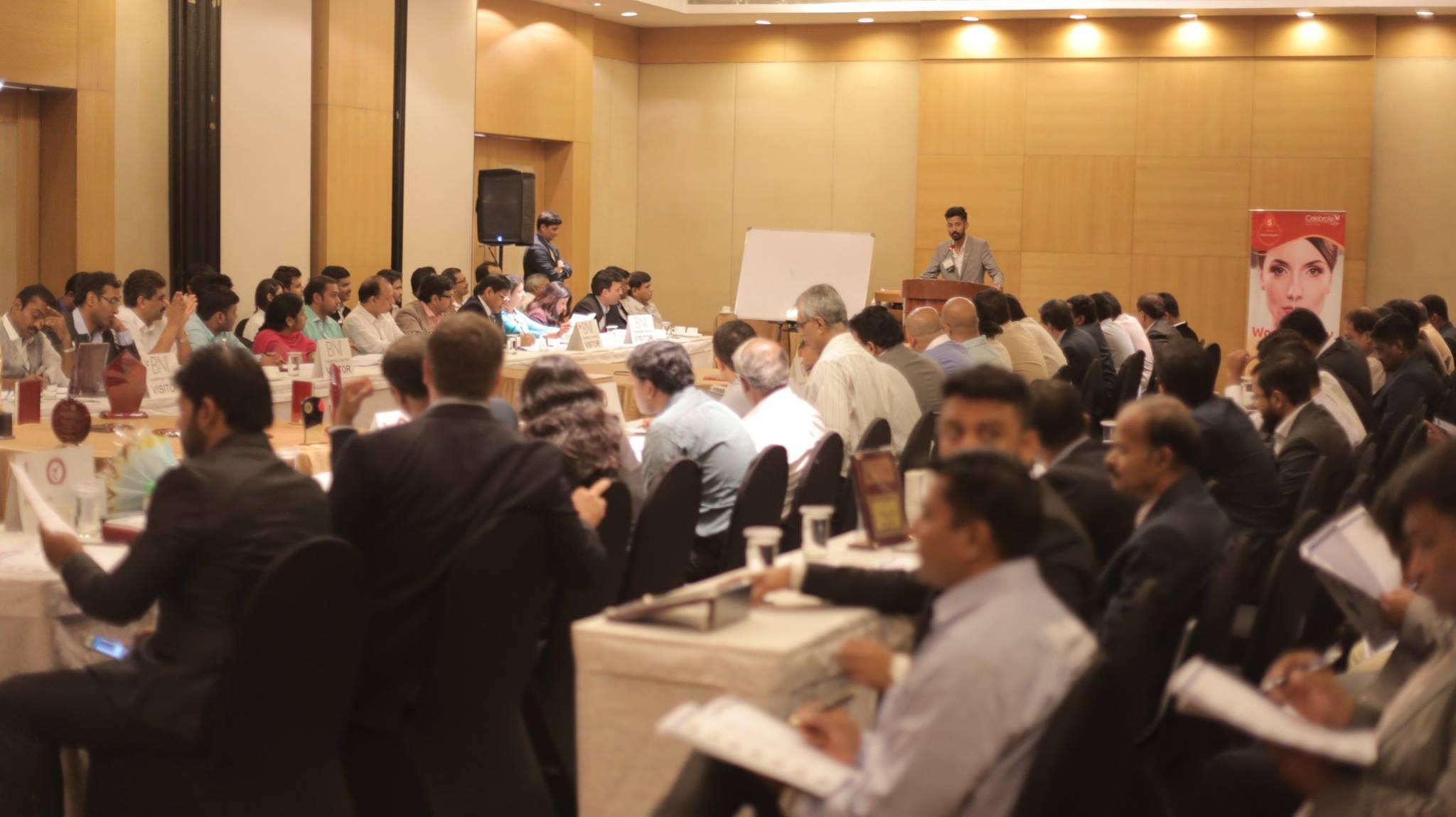
In India with most BNI chapters aiming to go platinum, and those that are already at platinum striving for titanium and even centennium, it is imperative to keep certain pointers in mind. Running large chapters requires large teams, delegation, maximum participation by core members and support of the newer members to sustain growth.
Here are 5 top tips to steer your chapter clear of obstacles and take steps towards stability and sustained growth.
Follow the basics
No matter how large the chapter size, there is nothing more important than running your chapter with the BNI basics. Showing up early, staying late, participating in the meeting, taking roles, giving to your members and bringing quality visitors; all these basics ensure a consistent BNI experience continues to percolate to each new member who joins and who captivated by the format that make BNI so successful.
Add new roles
Large chapters need more leadership team members to manage the running of the chapter. It may be a good idea to create new roles that fit your chapter needs. For example, some chapters have money spinner teams, which make sure that all members get support to generate more business through activities like joint calls to clients, chasing large ticket referrals and seeing them through conversion.
Keep the culture intact
Your chapter is only as good as its most sub-optimum member. As a chapter member each person plays a key role in making sure that the members follow the culture of the chapter. Making sure appreciation is done in public and critical feedback is done in private helps keep the energy of the chapter at a good positive level. A positive culture makes it conducive to build better relationships between members, which will later fructify into business relationships and referrals being passed.
Training, training, training
A chapter that attends trainings regularly is known to have lesser challenges in dealing with member issues. Regular trainings helps the leadership teams focus on moving the chapter to the next level rather than fire fighting basic issues. Trainings feed their minds with knowledge on how to leverage their membership to generate maximum business for themselves and their referral partners.
Decorum
Maintaining the right professional decorum when meetings are run is quintessential to the growth of the chapter in order to attract the right kind of visitors. Exhibiting non-professional behavior through dressing or use of inappropriate humor or language during presentations can cost you dearly.
So, as you grow your chapters from 50 to 75 this season, make sure you do it the right way – by inducting the right kind of members into the chapter, by gently weaving the right culture among your teammates and by raising the bar at all times.